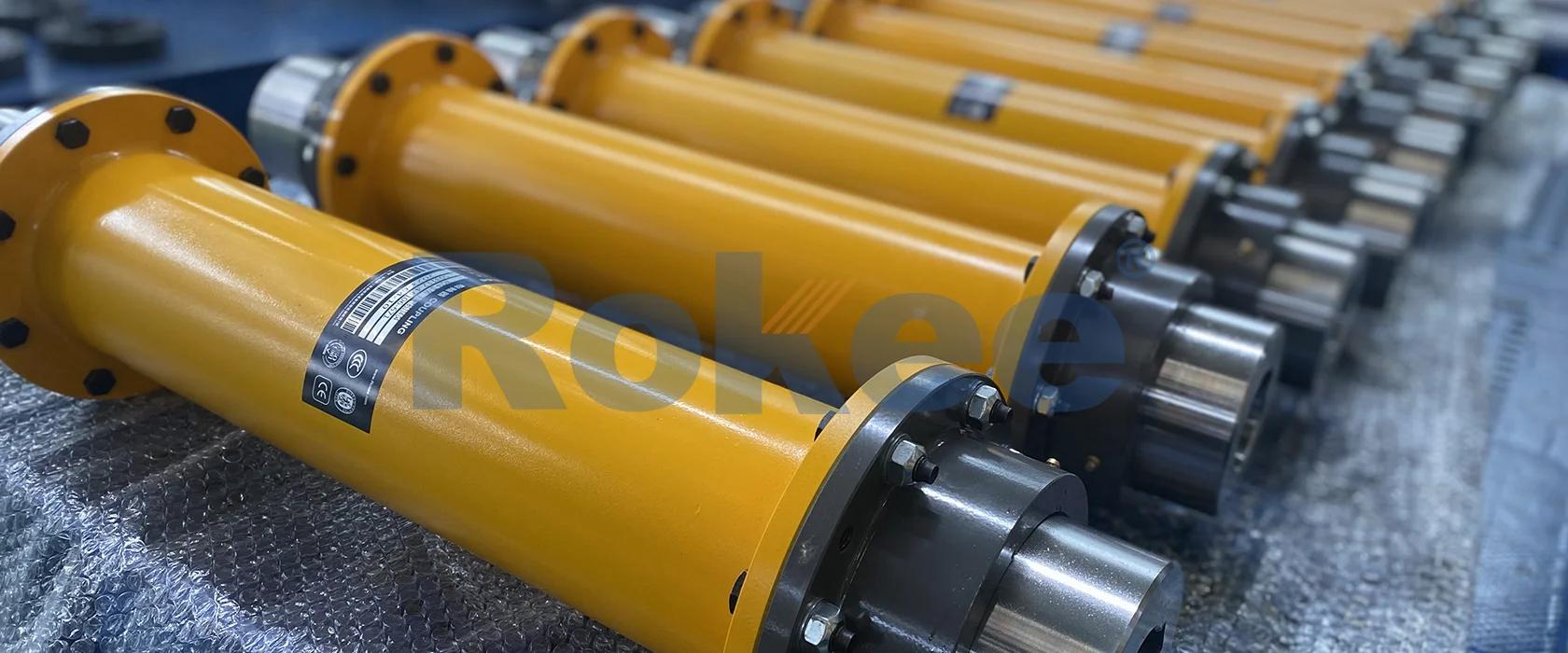
Rokee is a well-known high-quality supplier of Flexible Gear Couplings and technical services in China, customize flexible gear couplings according to user drawings, alternatively, if the user provides flexible gear couplings parameters, we can select the model and design drawings for you, support wholesale and export.


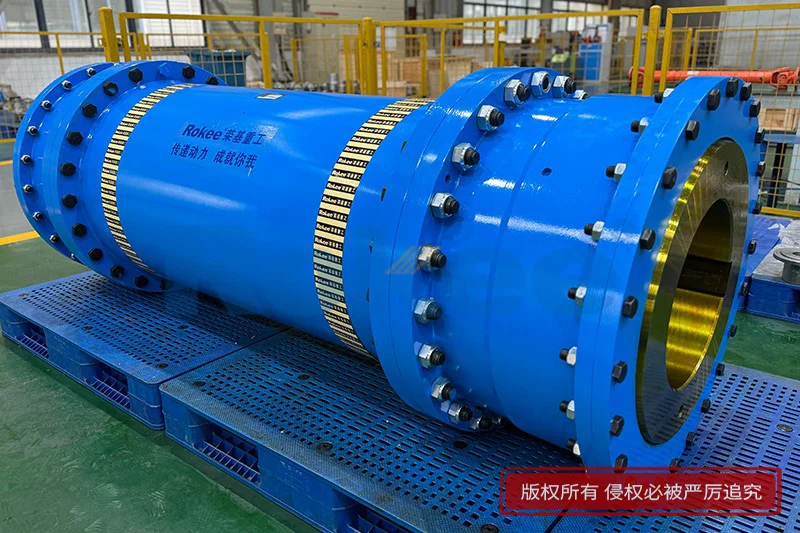
Flexible gear coupling is a high-performance coupling device that transmits torque through gear meshing. It combines the high torque characteristics of traditional gear transmission with the compensation capability of elastic couplings. This type of coupling consists of two wheel hubs with external teeth and two sleeves with internal teeth. It transmits power through the meshing of the internal and external teeth, and has certain compensation capabilities in the axial, radial, and angular directions.
Wheel hub components: usually forged alloy steel parts with precision machined outer teeth
Sleeve component: a ring-shaped component with internal teeth that meshes with the external teeth of the wheel hub
Sealing system: prevents lubricant leakage and contamination from entering
Lubrication system: including lubrication oil passage and oil storage chamber
When the drive shaft rotates, torque is transmitted to the driven shaft through the meshing of the outer teeth of the hub and the inner teeth of the sleeve. The special tooth profile design between the inner and outer teeth allows for relative displacement within a certain range, thereby compensating for axis deviation.
High torque density: The ability to transmit torque per unit size is superior to most types of couplings
Multi directional compensation capability: can simultaneously compensate for axial displacement (± 5-15mm), radial displacement (0.5-3mm), and angular deviation (0.5 ° -2 °)
Vibration damping characteristics: absorb vibration through oil film damping between tooth surfaces
Long life design: High quality materials and precision machining ensure long-term reliable operation
Compared with traditional rigid couplings, flexible toothed couplings can significantly reduce the additional load caused by centering errors; Compared with elastic couplings, it has higher torque transmission capacity and longer service life.
Heavy industry: rolling mills, mining machinery, large compressors
Energy sector: Steam turbine generator sets, wind power generation equipment
Shipbuilding industry: propulsion shaft system
Petrochemical industry: large pump sets, compressors
Paper Machinery: Large Drum Drive System
Transmission torque demand (rated torque and peak torque)
speed range
Shaft diameter size
Compensation requirements
Environmental conditions (temperature, corrosiveness, etc.)
Ensure that the shaft end clearance meets the manufacturer's requirements
Use specialized tools for installation to avoid hammering
The initial centering error should be controlled within 50% of the coupling compensation capacity
Lubricate according to specifications and ensure sufficient lubrication before the first operation
Regularly check the lubrication condition (every 3-6 months)
Monitoring temperature rise (under normal operating conditions, the temperature rise does not exceed 30 ℃ of the ambient temperature)
Regularly check the sealing condition
Abnormal vibration: usually caused by poor alignment or wear, requiring re alignment or replacement of components
Lubrication failure: manifested as overheating and abnormal noise, lubricant needs to be replaced
Tooth wear: Check the lubrication system and evaluate the remaining life of the coupling
As a key component of modern mechanical transmission systems, the development of flexible gear couplings will continue to drive industrial equipment towards higher efficiency and reliability. The correct selection, installation, and maintenance of flexible gear couplings are of great significance for ensuring the long-term stable operation of equipment.
In the field of mechanical power transmission, flexible gear couplings stand as one of the most widely used and reliable connecting components, designed to bridge two rotating shafts while transmitting torque efficiently and accommodating unavoidable shaft misalignments that occur in real-world operating conditions. Unlike rigid couplings that demand perfect shaft alignment and offer no tolerance for positional errors, flexible gear couplings combine the high torque-carrying capacity of gear-based transmission with the flexibility needed to compensate for angular, parallel, and axial shaft displacements, making them indispensable across heavy-duty industrial, manufacturing, and power generation systems.
At its core, the fundamental structure of a standard flexible gear coupling is engineered for durability, precise torque transfer, and misalignment compensation, consisting of several key integrated components that work in seamless harmony. The primary elements include two hub assemblies with external gear teeth, two inner gear sleeves (also referred to as gear rings), a central spacer or connecting sleeve (in some configurations), sealing components to retain lubrication and prevent contamination, and fasteners to secure the assembly to the driving and driven shafts. The external gear teeth on the hubs are not standard straight-cut teeth; instead, they feature a specialized crowned or drum-shaped profile, a critical design modification that sets flexible gear couplings apart from rigid gear couplings and enables their flexible functionality. This crowned tooth design is precision-machined so that the center of the spherical tooth surface aligns with the gear axis, creating a curved contact surface that allows for angular movement between the meshing internal and external gears without edge loading or uneven stress distribution. The inner gear sleeves feature straight internal teeth that mesh tightly with the crowned external teeth on the hubs, with a controlled backlash that facilitates smooth rotation and misalignment accommodation while maintaining consistent torque transmission.
The hubs, which are the direct connection points to the drive and driven shafts, are typically manufactured from high-strength alloy steel or carbon steel through forging and precision machining processes to ensure exceptional mechanical strength, wear resistance, and fatigue life. The bore of each hub is machined to match the diameter of the connected shafts, and most designs include keyways or tapered locking mechanisms to prevent slippage and ensure a secure, non-sliding connection during high-torque operation. The inner gear sleeves are often paired with flange structures that allow for bolted assembly, enabling easy installation, removal, and maintenance without requiring full disassembly of the connected machinery. Sealing elements, such as gaskets or lip seals, are integrated into the gear sleeve assemblies to enclose the meshing gear teeth, retaining lubricating grease or oil within the coupling cavity and blocking out dust, moisture, debris, and other external contaminants that could accelerate wear and reduce service life. In some extended-length configurations, a central spacer is added between the two inner gear sleeves to increase the distance between the connected shafts, accommodating applications where shaft separation is necessary for equipment layout or operational clearance requirements.
The performance attributes of flexible gear couplings are directly derived from their specialized structural design, making them uniquely suited for heavy-load, high-speed, and harsh operating environments. The most prominent performance advantage is their exceptional torque transmission capacity relative to their compact size; the gear meshing mechanism distributes torque across multiple tooth contacts simultaneously, allowing the coupling to handle extremely high torque loads without deformation or failure, far exceeding the torque limits of elastomeric or other non-gear flexible couplings. This high torque density makes them ideal for heavy machinery where space is limited but power transfer demands are intense. Another defining performance feature is their ability to compensate for multiple types of shaft misalignments simultaneously, including angular misalignment (caused by shafts intersecting at a slight angle), parallel misalignment (where shafts are offset horizontally but remain parallel), and axial misalignment (endwise movement of shafts due to thermal expansion, mechanical vibration, or installation tolerances). The crowned external teeth eliminate the edge contact and stress concentration that plagues straight-tooth gear couplings, enabling smooth meshing even when shafts are not perfectly aligned, reducing reactive loads on connected equipment bearings and extending the overall service life of the entire drive system.
Additionally, flexible gear couplings exhibit excellent torsional rigidity, meaning they can transmit torque efficiently with minimal torsional deflection, ensuring precise power delivery and maintaining operational accuracy in machinery that requires consistent rotational speed and timing. They also demonstrate strong resistance to shock loads and vibration, absorbing sudden torque spikes and reducing the transfer of mechanical vibration between the driving and driven components, which helps stabilize equipment operation and reduce noise levels in industrial settings. Their robust construction allows them to operate reliably in extreme temperature conditions, high-humidity environments, and areas with heavy industrial dust or chemical exposure, provided proper lubrication and sealing are maintained. Unlike some flexible coupling types that rely on elastic elements prone to degradation over time, the all-metal construction of standard flexible gear couplings (excluding sealing components) offers exceptional durability and resistance to fatigue, with a long operational lifespan when maintained properly. They also feature low rotational inertia, which minimizes energy loss during startup, shutdown, and speed changes, contributing to improved overall energy efficiency of the drive system.
Flexible gear couplings are classified into several distinct types based on structural configuration, application-specific design modifications, and functional capabilities, each tailored to address unique operational requirements and installation constraints. The most common classification is based on overall structure and shaft spacing needs, distinguishing between full gear couplings (also known as double-gear couplings) and half gear couplings, as well as spacer-type and non-spacer-type variants. Full flexible gear couplings, the most widely used design, consist of two sets of gear meshing pairs (two external gear hubs and two inner gear sleeves) connected by a flange or spacer, providing maximum misalignment compensation and torque capacity for general heavy-duty applications. Half gear couplings, by contrast, feature only one gear meshing pair, designed for applications with limited space or minimal misalignment requirements, often used in lighter-duty or compact machinery setups where full coupling functionality is unnecessary.
Spacer-type flexible gear couplings are engineered with a detachable central spacer between the two inner gear sleeves, available in various lengths to accommodate specific shaft center distances. This design is particularly valuable in applications where maintenance or replacement of the coupling is required without moving the connected driving and driven equipment, such as pumps, compressors, and large motor-driven systems, as the spacer can be removed to disassemble the coupling without disrupting shaft alignment. Non-spacer-type couplings are more compact, with the two inner gear sleeves directly connected, making them suitable for applications with minimal shaft separation and limited installation space. Another key classification is based on tooth profile design, separating standard crowned tooth couplings and modified tooth profile couplings; the standard crowned tooth design offers balanced misalignment compensation and load distribution for most industrial uses, while modified profiles are optimized for specific conditions such as high-speed operation, heavy shock loads, or extreme misalignment scenarios.
Additional specialized types include brake wheel-integrated flexible gear couplings, which feature a built-in brake wheel on one of the gear sleeves or hubs, designed for machinery that requires integrated braking systems alongside power transmission, such as cranes, conveyors, and material handling equipment. These integrated designs eliminate the need for separate brake mounting, simplifying equipment layout and reducing overall component count. High-speed flexible gear couplings are precision-engineered and dynamically balanced to operate smoothly at elevated rotational speeds, minimizing vibration and ensuring stable performance in gas turbines, generators, high-speed pumps, and other high-RPM machinery. There are also corrosion-resistant variants constructed from specialized alloy steels or surface-treated materials, intended for use in harsh environments with exposure to moisture, chemicals, or salt spray, such as marine applications, chemical processing plants, and wastewater treatment facilities. Each type retains the core gear meshing and flexible design principles but is adapted to meet the unique demands of its target application, ensuring optimal performance and reliability in diverse operating conditions.
The combination of high torque capacity, misalignment compensation, durability, and versatility makes flexible gear couplings applicable across an extensive range of industrial sectors and mechanical systems, serving as a critical link in power transmission chains worldwide. In the heavy machinery and manufacturing sector, they are widely used in conveyor systems, rolling mills, extruders, mixers, and crushers, where heavy loads, continuous operation, and inevitable shaft misalignment are common challenges. These couplings ensure uninterrupted power transfer from motors and gearboxes to processing equipment, even in high-vibration, high-shock environments, reducing downtime and maintenance frequency. In the power generation industry, flexible gear couplings are essential components in gas turbines, steam turbines, generators, fans, and blowers, connecting drive shafts and accommodating thermal expansion-induced axial movement and minor alignment errors that occur during startup and continuous operation. Their high torque and high-speed capabilities make them ideal for the demanding operational requirements of power generation equipment, where reliability is paramount to avoid costly system failures.
In the petrochemical and oil and gas industry, flexible gear couplings are employed in pumps, compressors, agitators, and rotary machinery, where they must operate reliably in potentially explosive, high-temperature, and corrosive environments. Their sealed, robust design prevents lubricant leakage and contamination, meeting the strict operational safety and durability standards of the industry. Marine and shipbuilding applications rely on these couplings for propulsion systems, deck machinery, pumping systems, and auxiliary equipment, where they withstand saltwater exposure, mechanical vibration, and shaft misalignment caused by vessel movement and hull flexing. In the mining and construction industry, flexible gear couplings are used in excavators, loaders, drilling equipment, and material processing machinery, enduring heavy shock loads, dust, and extreme physical stress while maintaining consistent power transmission. They are also widely used in transportation-related machinery, including railway equipment, automotive manufacturing machinery, and aerospace testing equipment, where precision torque transfer and misalignment tolerance are critical for operational safety and performance.
Beyond these heavy industrial sectors, flexible gear couplings find use in general manufacturing, food and beverage processing, pharmaceutical production, and wastewater treatment, adapting to both heavy-duty and moderately demanding applications. Their ability to work with various shaft sizes, torque ranges, and misalignment conditions makes them a versatile choice for engineers and equipment designers seeking a reliable, long-lasting power transmission solution. Proper selection of the appropriate type of flexible gear coupling depends on several key factors, including the required torque capacity, rotational speed, type and degree of shaft misalignment, shaft dimensions, operating environment, and installation constraints. By matching the coupling’s structural and performance characteristics to the specific application requirements, operators can maximize equipment efficiency, reduce wear on connected components, minimize maintenance costs, and extend the overall service life of the entire mechanical drive system.
In summary, flexible gear couplings represent a pinnacle of mechanical power transmission design, merging the strength and efficiency of gear-based torque transfer with the flexibility to accommodate real-world shaft misalignments. Their well-engineered structural components, including crowned gear teeth, robust hubs, sealed gear sleeves, and adaptable assembly designs, deliver exceptional performance in terms of torque capacity, misalignment compensation, fatigue resistance, and operational durability. The diverse range of types, from standard full couplings to specialized spacer, high-speed, and integrated variants, ensures that there is a suitable flexible gear coupling for nearly every industrial power transmission application. As industrial machinery continues to evolve toward higher loads, faster speeds, and more demanding operating conditions, flexible gear couplings will remain a vital component, providing reliable, efficient, and stable shaft connection and power transfer across countless critical systems. Their enduring popularity and widespread adoption stem from their ability to solve the universal challenge of shaft misalignment while delivering uncompromising performance and longevity in even the toughest industrial environments.
pu sandwich panel line,pu sandwich panel machine,sandwich panel machine
« Flexible Gear Couplings » Latest Update Date: 2026/3/24 , https://www.rokeecoupling.net/tags/flexible-gear-couplings.html