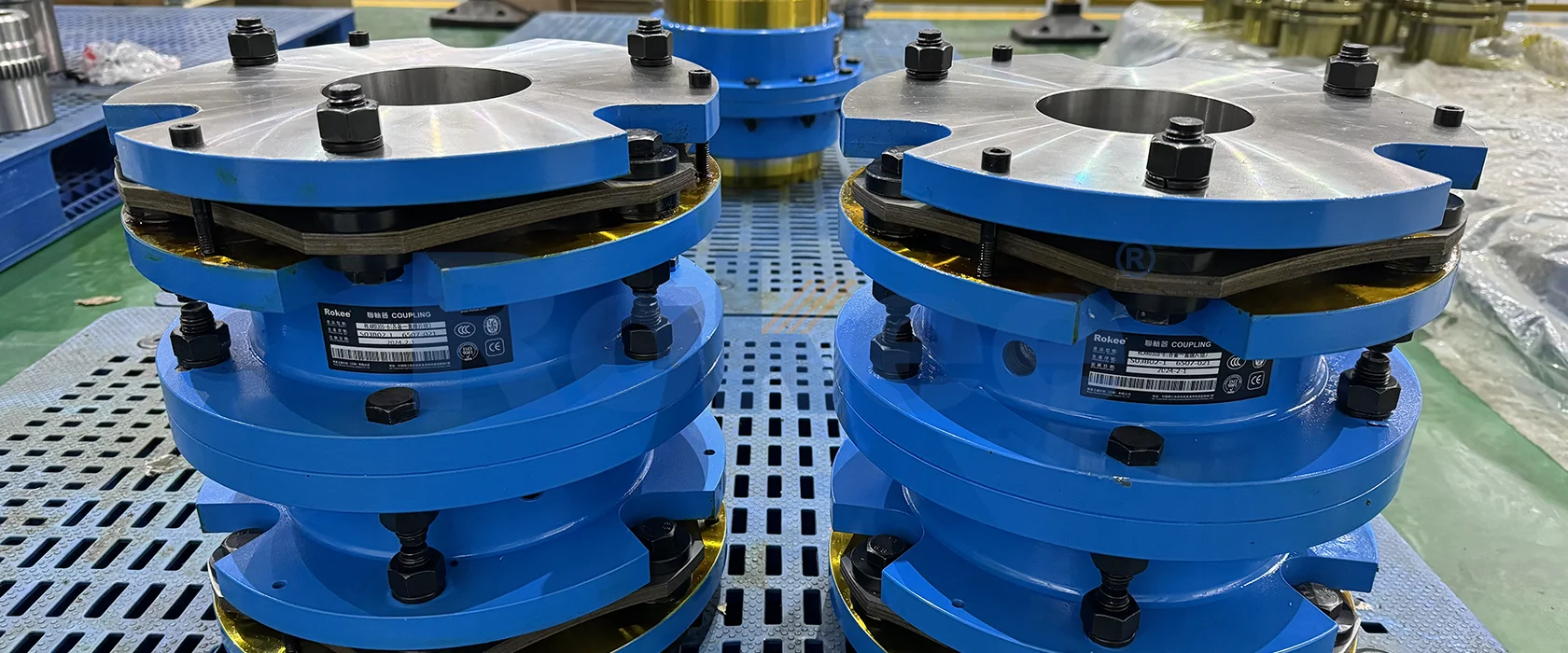
Rokee is a well-known high-quality supplier of Membrane Couplings and technical services in China, customize membrane couplings according to user drawings, alternatively, if the user provides membrane couplings parameters, we can select the model and design drawings for you, support wholesale and export.


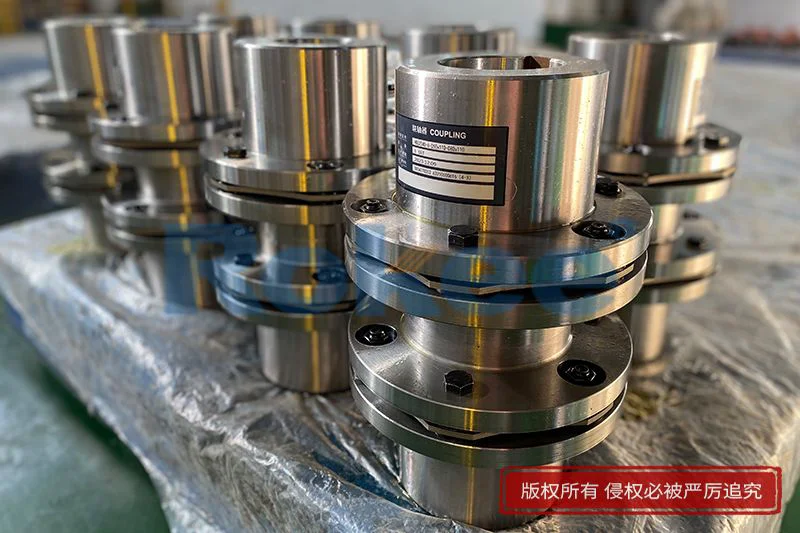
Membrane coupling is a high-performance flexible coupling widely used in modern industrial machinery transmission systems. It uses one or more specially designed metal diaphragms as elastic elements to achieve power transmission and displacement compensation between two axes. Compared with traditional couplings, membrane couplings have become the preferred transmission components in many industrial application fields due to their unique structural characteristics and excellent mechanical performance.
The core working principle of membrane couplings is based on the principle of elastic deformation. When power is transmitted from the drive shaft, it is achieved through the elastic deformation of the diaphragm:
Torque transmission: The diaphragm undergoes elastic deformation under the action of torque, transmitting rotational power to the driven shaft
Displacement compensation: The diaphragm can compensate for axial, radial, and angular displacements
Vibration absorption: The elastic properties of the diaphragm can absorb and buffer vibrations in the transmission system
This working principle enables the membrane coupling to effectively solve various alignment deviation problems that traditional rigid couplings cannot overcome without reducing transmission efficiency.
A typical membrane coupling is mainly composed of the following components:
Metal diaphragm group: usually made of stainless steel or other high-strength alloys, it is the core component of the coupling
Wheel hub: a metal component that connects the ends of a shaft, typically made of high-strength cast iron or steel materials
Intermediate section: The intermediate component connecting the two wheel hubs, with a length that can be adjusted as needed
Connecting bolt: used to fix the diaphragm to the wheel hub or intermediate section
Protective cover: a protective device equipped on some models to protect the membrane from external environmental influences
The design of membrane usually adopts porous structure or corrugated shape to optimize its elastic performance and fatigue life.
According to the structure and application requirements, membrane couplings can be divided into various types:
Single diaphragm type: suitable for applications with smaller torque and displacement compensation
Double membrane type: with better displacement compensation capability, suitable for situations with large deviations
Multi diaphragm type: used for high-power transmission, providing higher torque capacity
Axial insertion type: special design for easy installation and disassembly
Flange connection type: suitable for heavy-duty connection of large equipment
In addition, it can be divided into parallel membrane type, corrugated membrane type, and spiral membrane type according to the shape of the membrane.
Membrane couplings have several outstanding technical features:
High torque transmission capability: Modern membrane couplings can transmit up to millions of Newton meters of torque
Accurate centering compensation:
Axial displacement compensation: usually up to ± 0.5-5mm
Radial displacement compensation: usually up to 0.2-3mm
Angular displacement compensation: usually up to 0.5 ° -3 °
Zero backlash transmission: ensuring the implementation of high-precision motion control
Maintenance free design: No lubrication required, reducing maintenance costs
High speed capability: Well balanced membrane couplings can reach tens of thousands of revolutions per minute
Excellent fatigue resistance: High quality membranes can withstand more than 10 ^ 7 cycles of cyclic loading
Membrane couplings are widely used for their excellent performance in:
Power generation equipment: steam turbines, gas turbines, wind turbines, etc
Petrochemical industry: compressors, pumps, mixing equipment, etc
Shipbuilding industry: main propulsion system, auxiliary power system
Metallurgical industry: rolling mills, fans, pump sets, etc
Paper Machinery: Various Roller Transmission Systems
Precision machinery: high-precision equipment such as CNC machine tools and robots
Aerospace: Aircraft Engine Auxiliary Transmission System
In the field of wind power generation, membrane couplings have become the mainstream choice, with a market share of over 70%.
The correct selection is crucial for ensuring the performance and service life of the coupling, with main considerations including:
Torque demand: including rated torque and peak torque
Speed range: working speed and critical speed
Displacement compensation requirements: expected axial, radial, and angular deviations
Environmental conditions: temperature, humidity, corrosive media, etc
Space limitations: Install space size constraints
Dynamic characteristics: requirements for torsional stiffness, inertia, etc
Standard certification: industry-specific requirements (such as API, ATEX, etc.)
When selecting, it is recommended to leave a safety margin of 15-20% and consider possible system upgrade requirements in the future.
Installation points:
Ensure that the shaft end is clean and undamaged
Use specialized tools for alignment and control deviations within the allowable range
Tighten the bolts according to the specified torque value
Avoid forced installation that may cause pre deformation of the diaphragm
Maintenance suggestion:
Regularly inspect the membrane for cracks or plastic deformation
Monitor the tightening status of bolts
Check the operating temperature of the coupling
Record vibration data and analyze the trend of changes
Although membrane couplings are designed to be maintenance free, regular inspections can significantly extend their service life.
Compared with traditional types such as gear couplings and elastic couplings, membrane couplings have significant advantages:
Compared to gear couplings:
No lubrication required
Easy maintenance
No tooth surface wear problem
More suitable for high-speed applications
Compared with elastic couplings:
higher accuracy
Longer service life
Better temperature adaptability
Greater displacement compensation capability
Compared to universal couplings:
A smoother transmission
Smaller vibrations
higher efficiency
A simpler structure
Laminated membrane couplings are particularly suitable for applications that require high reliability, long lifespan, and low maintenance.
As an important component in the field of modern mechanical transmission, membrane couplings have gained widespread recognition for their excellent performance and reliability. With the advancement of materials science and manufacturing technology, the application scope of membrane couplings will be further expanded, and their performance will continue to improve. Correctly selecting, installing, and maintaining membrane couplings can not only ensure the stable operation of the transmission system, but also significantly reduce the total lifecycle cost, providing solid guarantees for the efficient operation of industrial equipment.
In the field of mechanical power transmission, couplings serve as critical intermediate components that connect two rotating shafts together, enabling the transfer of torque while accommodating misalignments and dampening mechanical vibrations generated during operation. Among the diverse range of coupling types available for industrial use, membrane couplings stand out as a high-performance, versatile solution that has gained widespread adoption across precision engineering, heavy industry, energy production, and high-speed machinery sectors. Unlike traditional rigid couplings that offer no flexibility or elastomeric couplings that rely on rubber or plastic components prone to wear and degradation, membrane couplings utilize thin, flexible metal membranes as the core elastic element, combining exceptional torque transmission capacity with precise misalignment compensation and long-term operational stability.
At its core, the membrane coupling is a type of metal flexible coupling, constructed primarily from two hub sections (also referred to as half-couplings) that attach to the driving and driven shafts respectively, and a set of thin, high-strength metal membranes positioned between the two hubs. These membranes are typically manufactured from premium alloy steel or stainless steel, chosen for their excellent fatigue resistance, tensile strength, and elastic deformability, and are secured to the hubs using precision-machined high-strength bolts arranged in a circular pattern. The defining structural feature of the membrane coupling lies in the absence of sliding friction surfaces or lubricated moving parts; instead, all misalignment compensation and torque transmission are achieved solely through the controlled elastic deformation of the metal membranes. When the coupling is in operation, torque is transferred from the driving hub to the membrane group, which then distributes the rotational force evenly to the driven hub, while the thin membrane sheets bend, twist, and stretch slightly to accommodate axial, radial, and angular misalignments between the two shafts. This non-contact, friction-free operating mechanism eliminates the need for regular lubrication, reduces maintenance requirements, and prevents wear-related performance degradation that plagues many conventional coupling designs, making it ideal for long-term, continuous operation in demanding industrial environments.
The performance profile of membrane couplings is shaped directly by their unique structural composition, setting them apart from other flexible coupling variants with a unique combination of mechanical properties. One of the most prominent performance advantages is zero backlash transmission, a critical attribute for precision machinery applications where rotational accuracy and positional repeatability are non-negotiable. The rigid metal membrane structure ensures that there is no lost motion or play between the driving and driven shafts, even under fluctuating load conditions, allowing for consistent speed synchronization and precise torque delivery. Additionally, membrane couplings exhibit exceptional torsional rigidity, meaning they can transmit high levels of torque with minimal torsional deformation, making them suitable for both low-speed, high-torque heavy-duty applications and high-speed, light-load precision scenarios. Misalignment compensation is another key performance metric; standard membrane couplings can effectively compensate for moderate angular misalignment (typically up to several degrees per membrane set), radial misalignment (limited by the design and thickness of the membrane group), and axial displacement caused by thermal expansion or mechanical tolerance variations, without imposing excessive additional loads on the connected shafts, bearings, or gearboxes. This ability to absorb misalignments helps reduce stress on adjacent components, extend the service life of the entire transmission system, and lower the risk of premature equipment failure.
Beyond core transmission and misalignment capabilities, membrane couplings offer outstanding environmental adaptability and operational reliability. The all-metal construction allows them to perform consistently across a wide temperature range, from extreme low-temperature conditions to high-temperature industrial settings where elastomeric components would quickly harden, crack, or lose elasticity. They are also resistant to corrosion, oil contamination, dust, and mild chemical exposure, making them suitable for use in harsh industrial environments such as chemical processing plants, mining operations, and offshore machinery installations. Unlike elastomeric couplings, which have a limited service life due to material aging and fatigue, metal membrane couplings have excellent fatigue resistance, with a service life that can span years under proper installation and normal operating conditions, as the metal membranes are designed to withstand millions of rotational cycles without permanent deformation or failure. Furthermore, these couplings feature a compact, lightweight design relative to their torque transmission capacity, reducing the overall weight and inertia of the transmission system, which is particularly beneficial for high-speed rotating equipment where minimizing inertial loads is essential for efficient operation and reduced energy consumption.
Membrane couplings are categorized into several distinct types based on variations in membrane structure, the number of membrane groups, and shaft connection methods, each tailored to specific performance requirements and application scenarios. The most fundamental classification is based on the number of membrane assemblies: single-membrane couplings and double-membrane couplings. Single-membrane couplings consist of a single set of metal membranes connecting the two shaft hubs, resulting in a simpler, more compact structure with lower manufacturing complexity. This type offers high flexibility and effective misalignment compensation for moderate loads and speeds, making it suitable for light-duty precision equipment, small-scale machinery, and applications where installation space is limited. However, single-membrane designs have a lower torque capacity and are less effective at handling combined misalignments (simultaneous angular, radial, and axial displacement) compared to double-membrane variants. Double-membrane couplings, by contrast, feature two separate membrane groups with an intermediate spacer sleeve between them, creating a symmetrical, balanced structure that enhances torque transmission capacity, torsional rigidity, and misalignment compensation performance. The dual-membrane design can handle larger angular and radial misalignments, reduces bending stress on the shafts, and provides better dynamic balance at high rotational speeds, making it the preferred choice for heavy-duty, high-speed, and long-distance shaft connections where greater flexibility and load-bearing capacity are required.
Another important classification system for membrane couplings is based on the shaft connection method, which determines how the coupling hubs attach to the driving and driven shafts, directly impacting installation convenience, torque transmission efficiency, and shaft protection. The most common connection types include keyway connection, clamping connection, and expansion sleeve connection, each with distinct structural and functional traits. Keyway-connected membrane couplings feature a standard parallel or tapered keyway machined into the hub bore, matching a corresponding key on the shaft, which provides a secure, positive torque transmission through the mechanical interlock of the key and keyway. This design is widely used in general industrial machinery, offering reliable performance and ease of installation, though it may introduce minor imbalance and can cause slight wear to the shaft keyway over time under heavy loads. Clamping-type membrane couplings utilize a split hub design with clamping screws that compress the hub bore tightly onto the shaft surface, creating a friction-based connection without the need for keyways. This keyless design ensures uniform contact between the hub and shaft, eliminates keyway-related backlash and imbalance, and protects the shaft from damage, making it ideal for precision equipment such as CNC machine tools, servo motor drives, and measuring instruments where balance and shaft integrity are critical. Expansion sleeve-connected membrane couplings employ a tapered expansion sleeve inserted between the hub and shaft, which is tightened to create a high-friction, keyless connection capable of transmitting extremely high torque without slippage. This design distributes pressure evenly across the shaft surface, avoids stress concentrations, and allows for easy installation and removal without damaging the shaft, making it suitable for heavy-duty industrial equipment, large-scale rotating machinery, and high-torque transmission systems.
In addition to these primary classifications, membrane couplings can also be differentiated by membrane design, such as integral single-piece membranes and laminated multi-layer membranes. Integral membrane couplings are machined from a single solid piece of metal alloy, with the membrane section formed as part of the hub, resulting in a highly rigid, zero-backlash structure ideal for ultra-precision applications. Laminated membrane couplings consist of multiple thin metal sheets stacked together to form the membrane group, which enhances flexibility, fatigue resistance, and misalignment compensation, while distributing stress across multiple layers to reduce the risk of membrane failure. This laminated design is widely used in medium to heavy-duty applications, offering a balanced combination of flexibility and torque capacity. Regardless of the specific classification, all membrane couplings share the core advantages of metal elastic construction, maintenance-free operation, and reliable performance, with variations in design simply optimizing them for different load, speed, and precision requirements.
The unique combination of structural integrity, performance versatility, and environmental resilience makes membrane couplings indispensable across a vast array of industrial sectors, with applications spanning precision manufacturing, energy production, process engineering, transportation, and aerospace-related mechanical systems. In precision machinery and automation equipment, such as CNC machine tool spindles, servo drive systems, robotic arm transmissions, and precision measuring instruments, membrane couplings are favored for their zero backlash, high torsional rigidity, and precise motion transmission, ensuring the high positional accuracy and repeatability required for complex machining and automated operations. The absence of backlash eliminates positioning errors, while the flexible membrane design absorbs minor vibrations and misalignments, protecting sensitive precision components from damage and improving overall product quality in manufacturing processes.
In heavy industrial and process equipment, membrane couplings are widely used in pumps, fans, compressors, conveyors, and mixing systems, where they provide reliable torque transmission while accommodating misalignments caused by thermal expansion, foundation settlement, or mechanical wear. The maintenance-free, all-metal design is particularly valuable in continuous production environments where downtime for coupling maintenance must be minimized, and the corrosion resistance makes them suitable for use in chemical, petrochemical, and water treatment facilities where exposure to liquids, vapors, and corrosive substances is common. In the energy production sector, including gas turbines, wind turbine drive trains, and generator sets, membrane couplings are utilized for high-speed shaft connections, offering high torsional stability, excellent dynamic balance, and the ability to withstand the high rotational speeds and fluctuating loads inherent in power generation equipment. Their ability to operate reliably at elevated temperatures and resist fatigue under cyclic loading ensures stable performance in critical power generation systems, reducing the risk of unplanned outages.
Membrane couplings also play a vital role in transportation and marine machinery, where durability, reliability, and resistance to harsh environmental conditions are essential. They are used in propulsion systems, transmission assemblies, and auxiliary equipment for marine vessels, offshore drilling rigs, and heavy-duty vehicles, providing consistent torque transfer while withstanding vibration, shock loads, and saltwater exposure. In high-speed rotating equipment, such as centrifuges, blowers, and textile manufacturing machinery, the lightweight, low-inertia design of membrane couplings reduces energy consumption and improves operational efficiency, while the misalignment compensation capability extends the service life of bearings and other rotating components. Additionally, in specialized industrial applications that require clean, lubrication-free operation, such as food and beverage processing, pharmaceutical manufacturing, and semiconductor production, membrane couplings are the ideal choice because they do not require lubrication, eliminating the risk of oil contamination and meeting strict hygiene and cleanliness standards for these sensitive industries.
When selecting the appropriate membrane coupling for a specific application, several key performance and operational factors must be considered to ensure optimal functionality and longevity, including nominal torque capacity, maximum rotational speed, allowable misalignment ranges, shaft diameter compatibility, and environmental operating conditions. It is crucial to match the coupling’s torque rating to the actual operating load of the transmission system, avoiding overloading that could lead to membrane fatigue or failure, while also accounting for potential shock loads and torque fluctuations. The rotational speed of the shafts must align with the coupling’s maximum speed limit, as excessive speed can cause dynamic imbalance and increased stress on the membrane group. Misalignment compensation capabilities should be matched to the expected axial, radial, and angular displacements between the driving and driven shafts, considering factors such as thermal expansion, installation tolerances, and mechanical wear over time. Proper installation and alignment are also critical to maximizing the performance of membrane couplings; even the highest-quality coupling will underperform or fail prematurely if installed with excessive misalignment or improper hub tightening.
In summary, membrane couplings represent a sophisticated and highly efficient solution for modern mechanical power transmission systems, merging the strength and rigidity of metal components with the flexibility needed to accommodate shaft misalignments and dampen operational vibrations. Their diverse structural classifications, ranging from single to double membrane designs and various shaft connection methods, allow for tailored performance to meet the unique demands of nearly every industrial application, from delicate precision instruments to heavy-duty power generation equipment. The absence of sliding parts and lubrication requirements results in a low-maintenance, long-lasting component that enhances the reliability and efficiency of the entire transmission system, reducing operational costs and equipment downtime over time. As industrial machinery continues to evolve toward higher precision, higher speeds, and greater durability, the role of membrane couplings as a critical transmission component will only continue to grow, with ongoing advancements in material science and structural design further enhancing their performance and expanding their potential applications across emerging engineering fields. Their enduring popularity in industrial sectors worldwide is a testament to their superior performance, versatility, and practical value in solving the core challenges of reliable, efficient power transmission.
pu sandwich panel line,pu sandwich panel machine,sandwich panel machine
« Membrane Couplings » Latest Update Date: 2026/3/24 , https://www.rokeecoupling.net/tags/membrane-couplings.html