-

LM/ML Plum Blossom Coupling
LM/ML Plum Blossom Coupling is the basic form of this series of couplings.View More -

LMD/MLZ Plum Blossom Coupling
LMD/MLZ Plum Blossom Coupling is added with transition connection, which eliminates the need of axially moving the semi-coupling when replacing the elastomer.View More -

LMS/MLS Plum Blossom Coupling
LMS/MLS Plum Blossom Coupling adopts double transition flange connection, which eliminates the need of axially moving the semi-coupling when replacing the elastomer.View More -

LMZ-I/MLL-I Plum Blossom Coupling
LMZ-I/MLL-I Plum Blossom Coupling adopts split brake wheel design, suitable for situations where braking is required.View More -

LMZ-II/MLL-II Plum Blossom Coupling
LMZ-II/MLL-II Plum Blossom Coupling adopts integral brake wheel design, suitable for situations where braking is required.View More -

LMPK/MLPK Plum Blossom Coupling
LMPK/MLPK Plum Blossom Coupling adopts split brake disc design, suitable for situations where braking is required and eliminating the need of axially moving the semi-coupling when replacing the elastomer.View More
In the vast and intricate landscape of mechanical power transmission systems, couplings serve as indispensable connecting components that bridge rotating shafts, transfer torque, and mitigate the adverse effects of shaft misalignment and operational vibration. Among the diverse array of coupling types available for industrial use, the plum blossom coupling, also widely referred to as the jaw elastic coupling, stands out as one of the most extensively applied and cost-effective solutions. Renowned for its straightforward structural design, reliable performance, and versatile adaptability to varied working conditions, this coupling has secured a permanent place in light, medium, and even some heavy-duty mechanical setups across countless manufacturing and engineering sectors. Unlike rigid couplings that demand perfect shaft alignment and offer no tolerance for displacement or vibration, the plum blossom coupling integrates elastic elements into its core design, blending the stability of metal components with the flexibility of non-metallic elastic materials. This unique combination enables it to address common operational challenges in mechanical transmission, such as manufacturing tolerances, installation errors, thermal expansion and contraction of shafts, and dynamic vibration generated during high-speed rotation or load fluctuations. A comprehensive understanding of its internal structure, inherent performance traits, distinct classification criteria, and practical application scenarios is crucial for engineers, maintenance technicians, and equipment designers to select, install, and maintain these components optimally, thereby enhancing the overall efficiency, service life, and operational stability of mechanical equipment.
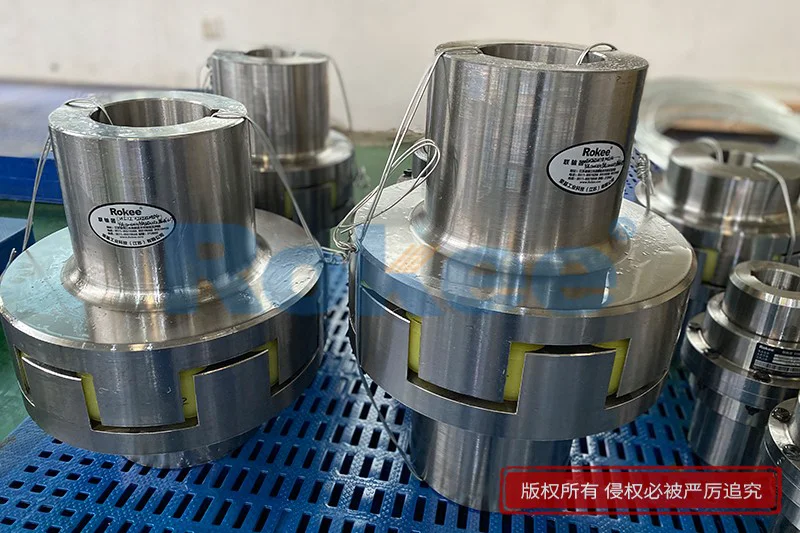
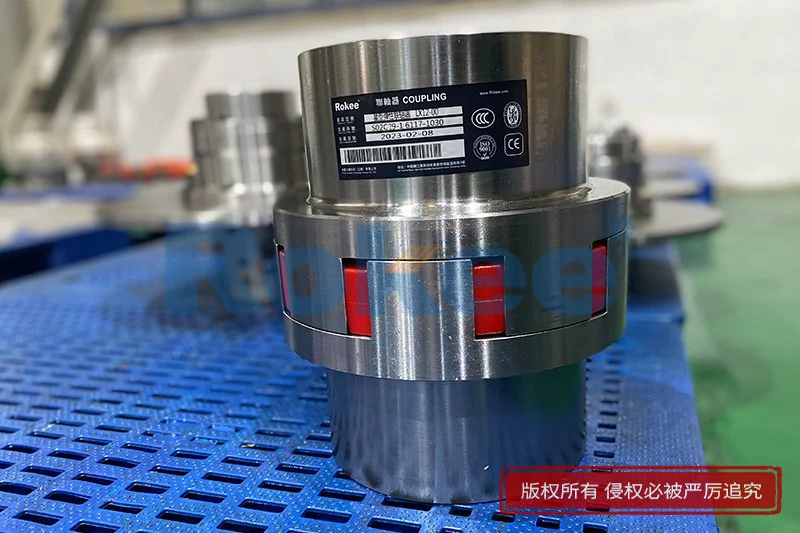
At its core, the plum blossom coupling features a minimalist yet highly functional structural composition, consisting of three primary integral parts that work in seamless coordination to fulfill power transmission tasks. The first and most foundational components are the two metal half-couplings, also known as jaw hubs, which form the rigid framework of the entire coupling. These half-couplings are typically crafted from high-strength metallic materials, with common options including carbon steel, stainless steel, and aluminum alloy, each selected based on specific operational requirements such as load capacity, corrosion resistance, and weight constraints. Carbon steel half-couplings are favored for their exceptional mechanical strength and durability, making them suitable for heavy-load and high-torque transmission scenarios; stainless steel variants offer superior resistance to rust, oxidation, and chemical corrosion, ideal for use in humid, corrosive, or clean industrial environments; aluminum alloy half-couplings, on the other hand, are lightweight and have low rotational inertia, perfect for high-speed, precision-driven equipment where minimizing energy loss from excess weight is critical. Each half-coupling is precision machined with evenly spaced, protruding claw-like teeth on its inner facing surface, and these teeth are arranged in a staggered pattern between the two opposing half-couplings to create uniform gaps for the elastic element. The inner bore of each half-coupling is machined to match the diameter of the connected shaft, with options for keyway connections, set screw fixations, or clamp-style fastenings to ensure a tight, slip-free bond between the coupling and the shaft, preventing torque loss during rotation.
The second core component, and the defining feature of the plum coupling, is the elastic plum blossom spacer, often called the spider insert, which sits snugly between the two metal half-couplings and fills the gaps created by the staggered claw teeth. This elastic element is named for its distinct petal-like shape, resembling the bloom of a plum blossom, and it is exclusively manufactured from high-elasticity, wear-resistant non-metallic materials. The most prevalent materials used for these spacers are polyurethane, natural rubber, and synthetic elastomers like Hytrel, each offering unique performance characteristics tailored to different working environments. Polyurethane elastic spacers dominate general industrial applications due to their outstanding mechanical properties, including high tensile strength, excellent wear resistance, and moderate elasticity, allowing them to withstand repeated compression and torsion without permanent deformation. Natural rubber spacers provide superior vibration damping and shock absorption capabilities, making them ideal for equipment with frequent impact loads or high vibration levels, while synthetic elastomer spacers offer enhanced temperature resistance and chemical stability, performing reliably in extreme temperature ranges or environments exposed to oil, grease, or mild chemical substances. This elastic spacer acts as a critical buffer and compensator within the coupling: it transmits torque from one half-coupling to the other through compressive force, absorbs sudden impact loads and operational vibration to protect connected motors, gearboxes, and working parts from damage, and compensates for three types of shaft misalignment that commonly occur in mechanical systems—axial displacement (along the shaft’s length), radial displacement (perpendicular to the shaft’s axis), and angular misalignment (tilt between the two shafts). The third auxiliary component group includes standard fasteners such as bolts, nuts, and set screws, which secure the half-couplings to the shafts and ensure the entire assembly remains stable during continuous rotation, eliminating the risk of loosening or disengagement under dynamic loads.
The performance of the jaw coupling is a direct reflection of its structural design and material selection, encompassing a range of key traits that define its suitability for diverse industrial applications. One of its most prominent performance advantages is its exceptional misalignment compensation capacity, a feature that sets it apart from rigid couplings and many rigid-flexible hybrid couplings. Unlike rigid couplings that fail or cause excessive wear to shafts and bearings when even minor misalignment exists, the plum blossom coupling’s elastic spacer can flex and deform slightly to accommodate moderate levels of axial, radial, and angular displacement without compromising power transmission efficiency or causing additional stress on connected components. This ability to compensate for installation errors and dynamic displacement significantly reduces the precision required for shaft alignment during equipment installation, lowering installation time and labor costs while extending the service life of bearings and other vulnerable transmission parts. Another key performance highlight is its superior vibration damping and shock absorption functionality. In mechanical systems, especially those with variable loads, frequent start-stop cycles, or high-speed rotation, vibration and impact forces are inevitable and can lead to component fatigue, noise pollution, and even equipment failure. The elastic plum blossom spacer acts as a natural shock absorber, dissipating vibrational energy and cushioning sudden impact loads, reducing noise levels by up to half in many cases and protecting the entire transmission system from premature wear and tear. This damping effect is particularly valuable in precision equipment where stable, vibration-free operation is essential for maintaining product quality and processing accuracy.
Additionally, the claw coupling boasts a compact and lightweight structural design, occupying minimal axial and radial installation space compared to larger, more complex coupling types such as gear couplings or diaphragm couplings. This compactness makes it highly suitable for equipment with limited installation space, a common constraint in modern automated machinery and compact industrial systems. It also features a maintenance-free or low-maintenance design, as the elastic spacer does not require lubrication, unlike gear couplings that need regular grease application to prevent wear. Routine maintenance only involves periodic inspections of the elastic spacer for signs of wear, cracking, or deformation, and replacement of the spacer is a quick and straightforward process that often does not require disassembly of the entire coupling or connected equipment, minimizing equipment downtime and maintenance costs. The coupling also exhibits reliable torque transmission performance, with a wide torque range that caters to both small-scale precision instruments and medium-duty industrial machinery; the metal half-couplings ensure high torque transmission efficiency, with minimal energy loss during rotation, while the elastic element maintains a stable connection even under fluctuating loads. It also offers a certain degree of overload protection: in the event of an extreme overload or sudden mechanical jam, the elastic spacer will deform or break first, acting as a sacrificial component to prevent damage to more expensive parts such as motors, gearboxes, or working shafts, thereby reducing overall maintenance and replacement expenses. However, it is important to note that the performance of the plum blossom coupling is limited by the properties of its elastic element; it is not designed for extremely high-temperature environments or heavy-duty, ultra-high-torque applications that exceed the load capacity of the elastic spacer, and it may experience accelerated wear in environments with sharp abrasive particles or strong chemical corrosives.
Plum blossom couplings are classified into several distinct categories based on multiple criteria, including structural design, elastic element type, installation method, and functional add-ons, allowing for precise matching to specific industrial equipment and working conditions. The most common classification is based on structural configuration and installation convenience, starting with the standard basic type plum blossom coupling, which features a simple, integrated half-coupling design without additional flanges or accessories. This basic model is the most widely used variant, suitable for general-purpose equipment with standard shaft connections and no special installation or maintenance requirements; it is cost-effective and easy to install, making it the default choice for most light and medium-duty applications. Next is the single-flange type plum blossom coupling, which incorporates a single transition flange on one of the half-couplings, designed to simplify the process of elastic spacer replacement. With this design, technicians can replace worn or damaged elastic elements without axially moving the entire coupling or disassembling connected equipment, a critical advantage for large or fixed equipment where axial movement is difficult or impossible. Building on this, the double-flange type plum blossom coupling features transition flanges on both half-couplings, offering even greater convenience for maintenance and spacer replacement, ideal for equipment that requires frequent inspections or operates in harsh conditions where the elastic spacer may wear out more quickly.
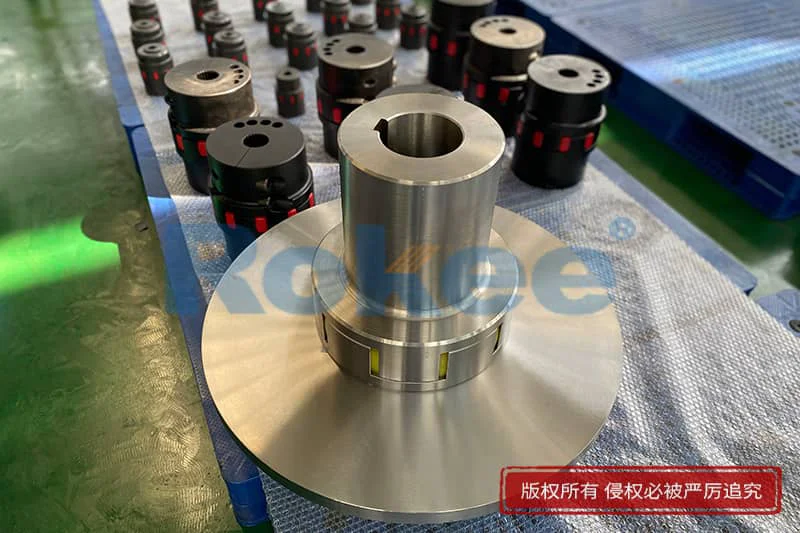
Another important classification is based on functional integration, including types equipped with brake wheels or brake discs, designed specifically for mechanical systems that require braking functionality alongside power transmission. These couplings feature an integrated or split brake wheel attached to one of the half-couplings, providing a dedicated surface for brake pads to engage, eliminating the need for a separate braking component and simplifying the overall transmission system design. This variant is commonly used in equipment such as conveyor systems, lifting machinery, and machine tools where immediate stopping or holding position is necessary for operational safety and precision. Couplings can also be classified by the material and hardness of the elastic plum blossom spacer, with different hardness levels tailored to specific load and vibration requirements: soft elastic spacers offer enhanced vibration damping and are suitable for high-vibration, impact-heavy equipment, while hard elastic spacers provide higher torque transmission capacity and better dimensional stability, ideal for high-speed, precision-driven machinery. Additionally, there are corrosion-resistant and high-temperature resistant variants, constructed with stainless steel half-couplings and specialized elastomer spacers, designed for use in extreme environments such as chemical processing plants, food processing facilities, and marine applications where standard couplings would degrade rapidly.
The versatility of the plum blossom coupling’s structure and performance has led to its widespread adoption across nearly every major industrial sector, serving as a reliable transmission component in an extensive range of equipment types. In the general machinery industry, it is a staple component in pumps, fans, compressors, and centrifugal separators, where it transfers power from electric motors to the working components while compensating for shaft misalignment caused by pipeline pressure or thermal expansion. In water treatment plants, agricultural irrigation systems, and industrial ventilation setups, these couplings ensure stable operation of water pumps and exhaust fans, reducing vibration and noise to create a safer and more comfortable working environment. In the machine tool and precision manufacturing industry, plum blossom couplings are widely used in CNC machine tools, machining centers, lathes, milling machines, and grinding machines, where their low backlash, high precision, and vibration damping capabilities are critical for maintaining the accuracy of metal cutting and processing operations. The compact design and low inertia of aluminum alloy variants make them particularly suitable for high-speed spindle drives and automated feed systems, ensuring smooth and precise movement without compromising processing quality.
In the realm of automated production and industrial robotics, plum couplings play a vital role in robotic arm joints, conveyor systems, packaging machinery, filling equipment, and assembly lines. Automated manufacturing lines demand reliable, low-maintenance transmission components that can adapt to continuous operation and frequent directional changes, and the quick maintenance and flexible performance of these couplings meet these demands perfectly. They are also used in food and beverage processing machinery, pharmaceutical packaging equipment, and textile manufacturing machines, where stainless steel and food-safe elastic spacer variants comply with strict hygiene and cleanliness standards without contaminating products. In the transportation and heavy machinery sector, these couplings are integrated into auxiliary systems of automotive and heavy-duty vehicle transmission systems, such as power steering pumps, water pumps, and air conditioning compressors, as well as in construction machinery auxiliary components, mining equipment, and material handling systems. They are also widely used in renewable energy equipment, including small wind turbine drive systems, solar tracking devices, and hydroelectric power generation auxiliary machinery, where their durability and low maintenance requirements support long-term, reliable operation in remote or outdoor environments.
Beyond these core sectors, plum blossom couplings find applications in woodworking machinery, printing and paper processing equipment, electronic manufacturing machinery, and various other light and medium-duty industrial systems. Their widespread use is a testament to their balanced performance, cost efficiency, and adaptability; they fill a unique niche in the transmission component market by offering a practical solution that bridges the gap between low-cost rigid couplings and high-performance, high-cost specialized couplings. While they may not be suitable for the most extreme heavy-duty, high-temperature, or ultra-high-torque applications, their ability to address the vast majority of routine industrial transmission challenges makes them irreplaceable in modern mechanical engineering. As industrial technology continues to evolve, with a growing focus on automation, precision, and energy efficiency, the design and material of plum blossom couplings are also being continuously optimized. New high-performance elastomer materials and precision machining techniques are enhancing their load capacity, temperature resistance, and service life, further expanding their application scope and ensuring they remain a key component in mechanical power transmission systems for years to come. Proper selection of the appropriate type, based on torque requirements, shaft size, operating speed, environmental conditions, and maintenance needs, combined with correct installation and regular inspection, will maximize the performance and service life of plum blossom couplings, ultimately improving the reliability and efficiency of the entire mechanical system.
-
Flexible Jaw Couplings
Mar 24, 2026In the realm of mechanical power transmission, couplings play a pivotal role in connecting rotating shafts, enabling efficient torque transfer while mitigating the adverse effects of shaft mi… -
Jaw Couplings
Feb 27, 2026Jaw coupling is a rigid coupling widely used in mechanical transmission systems, which occupies an important position in industrial production due to its simple structure, high torque transmi… -
Jaw Type Flexible Couplings
Dec 24, 2025In the realm of mechanical power transmission, the efficient and reliable transfer of torque between driving and driven shafts is paramount to the smooth operation of industrial equipment. Co… -
Plum Couplings
Dec 24, 2025In the complex ecosystem of mechanical power transmission, couplings are the unsung heroes that ensure seamless torque transfer between driving and driven shafts, bridging the gap between pow… -
Stainless Steel Jaw Couplings
Dec 24, 2025In the realm of mechanical power transmission, couplings serve as indispensable components that bridge the gap between driving and driven shafts, ensuring the smooth transfer of torque and ro… -
Plum Blossom Couplings
Dec 24, 2025In the intricate landscape of mechanical power transmission, couplings serve as essential intermediaries that connect rotating shafts, facilitating the seamless transfer of torque while addre… -
Multi Jaw Couplings
Dec 24, 2025In the domain of mechanical power transmission, couplings are indispensable components that bridge rotating shafts, enabling torque transfer while mitigating the adverse effects of misalignme… -
Jaw Flexible Couplings
Dec 23, 2025In the realm of mechanical power transmission, couplings play an indispensable role as components that connect two shafts to transmit torque while accommodating various forms of misalignment.…