-

WZL Drum Coupling
WZL Drum Coupling is a spherical hinged coupling. It has a connecting flange with an inner spherical surface, a spherical semi-coupling sleeve with an outer spherical surface, a special transmission key, an inner and outer limit cover, etc. The internal control generally adopts the splined sleeve design, which transmits torque through a specially designed key bar and can withstand large torque and radial load. The maximum angular displacement compensation can reach 3°, with a life indicator and safe and reliable structure.View More -

DC Drum Coupling
DC Drum Coupling is designed with drum teeth, which is used for connecting the reducer of crane transmission system with the drum. It can bear radial load and transfer large torque, but cannot transfer axial load.View More -

WJ Drum Coupling
WJ Drum Coupling is a spherical roller coupling, which is composed of jacket with connecting flange, spherical roller, semi-coupling, inner and outer cover plate and sealing system, capable of transmitting large torque and bearing radial load.View More -

WJA Drum Coupling
WJA Drum Coupling is a spherical roller coupling, which is composed of jacket with connecting flange, spherical roller, semi-coupling, inner and outer cover plate and sealing system, capable of transmitting large torque and bearing radial load. The connection between the coupling and the output shaft of the reducer adopts an involute spline pair design.View More -

RWC Drum Coupling
The ball and drum gear drum coupling is a drum coupling developed by Rokee with a more reliable structure, higher compensation ability and higher safety factor. The outer sleeve adopts a spherical drum tooth design, which has low requirements for shafting installation accuracy, large transmission torque, strong overload capacity and can withstand great radial load. The connection size is the same as that of DC series, but the bearing capacity is increased by more than 30%. The innovative spherical sealing technology makes this type of product maintain excellent lubrication and greatly improve its service life.View More
In the complex landscape of mechanical power transmission systems, drum couplings stand as indispensable components that bridge driving and driven shafts, facilitating seamless torque transfer while accommodating operational misalignments and mechanical stresses. Unlike rigid couplings that offer no flexibility and are prone to failure under even minor shaft deviations, drum couplings blend structural rigidity with controlled flexibility, making them a staple in heavy-duty industrial machinery where reliability, load-bearing capacity, and long service life are non-negotiable.
At its core, the barrel coupling is a type of flexible gear coupling, distinguished by its unique drum-shaped tooth profile that sets it apart from conventional straight-tooth gear couplings. The fundamental structural composition of a standard drum coupling consists of several key integrated components, each engineered to work in harmony to deliver optimal transmission performance. The primary elements include two outer gear sleeves with specially crafted drum-shaped teeth, two inner gear rings that mesh precisely with the outer teeth, connecting flanges for secure shaft attachment, sealing components to retain lubrication and prevent contamination, and fastening hardware to ensure stable assembly. The defining structural feature lies in the curved, spherical profile of the outer gear teeth, where the center of the spherical surface aligns with the coupling’s axis, a design that revolutionizes load distribution and misalignment compensation. This drum-shaped tooth geometry eliminates the sharp edge contact and stress concentration that plague straight-tooth couplings, instead creating a uniform contact area across the tooth surface during meshing. The inner gear rings are typically forged from high-strength alloy steel or carbon steel, heat-treated to enhance hardness and wear resistance, while the outer gear sleeves undergo precision machining to ensure tight dimensional tolerances and smooth tooth surfaces. The connecting flanges are designed to match standard shaft diameters, allowing for straightforward installation and disassembly without complex specialized tools, and the sealing system, often composed of durable gaskets and labyrinth seals, creates a closed internal chamber that holds lubricating grease or oil, protecting the gear meshes from dust, moisture, abrasive particles, and corrosive substances commonly found in industrial environments.
The structural design of barrel couplings directly translates to exceptional performance attributes that make them superior to many other coupling types in demanding operational conditions. One of the most prominent performance advantages is their outstanding misalignment compensation capability, which addresses the common industrial challenge of shaft misalignment caused by manufacturing tolerances, installation errors, thermal expansion, mechanical vibration, and equipment wear. Drum couplings can effectively accommodate three primary types of misalignment: angular misalignment, radial misalignment, and axial misalignment, either individually or in combination. The curved drum teeth allow for a gradual, even transfer of load as the shafts shift, preventing localized stress buildup that can lead to tooth fracture, premature wear, or shaft damage. Compared to straight-tooth gear couplings, drum couplings typically offer a 15% to 20% higher load-bearing capacity under the same overall dimensions, as the expanded contact area distributes torque and radial forces more evenly across the entire tooth surface, reducing contact pressure and extending component life. Transmission efficiency is another key performance metric, with drum couplings achieving efficiency rates of up to 99.7% in optimal operating conditions, minimizing energy loss through friction and ensuring that nearly all input power is transferred to the driven equipment. This high efficiency is further enhanced by the reduced friction coefficient of the drum-shaped teeth, which generate less heat during operation compared to straight teeth, lowering the risk of overheating and lubricant degradation.
Additional performance characteristics include robust shock absorption and vibration damping properties, which are critical in machinery that experiences intermittent loads, sudden starts and stops, or high-impact operational cycles. The flexible meshing of the drum teeth acts as a natural shock absorber, cushioning the transmission system from sudden torque spikes and reducing the transmission of vibration between the driving and driven shafts. This not only protects the coupling itself but also safeguards adjacent components such as motors, gearboxes, bearings, and output shafts, significantly reducing overall equipment maintenance needs and downtime. Drum couplings also exhibit excellent thermal stability, maintaining consistent performance across a wide range of operating temperatures, from extreme cold in outdoor or low-temperature processing facilities to high heat in heavy industrial settings with continuous operation. The durable material composition and heat-treated surfaces resist deformation, softening, or brittleness under temperature fluctuations, ensuring reliable performance over extended service intervals. Furthermore, the sealed design minimizes lubricant leakage and contamination, reducing the frequency of lubrication maintenance and making drum couplings suitable for harsh, hard-to-access environments where regular upkeep is challenging.
Barrel couplings are categorized into several distinct types based on structural variations, design modifications, and intended operational purposes, each tailored to meet specific load, speed, and environmental requirements. The most common classification is based on load capacity and application intensity, dividing them into standard drum couplings and heavy-duty drum couplings. Standard drum couplings are engineered for general industrial applications with moderate torque loads, consistent operating speeds, and relatively mild environmental conditions, offering a balanced combination of flexibility, load capacity, and cost-effectiveness for everyday machinery. They feature a compact, lightweight design that fits easily into confined installation spaces, making them ideal for a wide range of general manufacturing and processing equipment. Heavy-duty drum couplings, by contrast, are reinforced with thicker gear walls, larger tooth modules, and higher-grade alloy steel materials, engineered to transmit extremely high torque values and withstand severe mechanical stresses, heavy impact loads, and harsh operating environments. These couplings often feature enhanced sealing systems and reinforced flanges to handle the extreme demands of heavy industrial machinery, where failure would result in significant production losses.
Another key classification is based on structural configuration and additional functional features, including basic barrel couplings, drum couplings with brake wheels, and drum couplings with protective covers. Basic drum couplings represent the standard design, focused solely on torque transmission and misalignment compensation, with a simple, streamlined structure that is easy to install and maintain. Drum couplings integrated with brake wheels are designed for equipment that requires emergency stopping or speed regulation, with a built-in brake wheel component that allows for direct mounting of brake pads or brake bands, eliminating the need for separate braking components and simplifying the overall transmission system layout. This type is particularly useful in machinery where precise speed control and immediate stopping are critical for operational safety. Drum couplings with full protective covers feature an outer metal housing that encloses the entire gear meshing area, providing an extra layer of protection against heavy debris, falling objects, and extreme environmental contaminants, making them suitable for open-air or highly abrasive work sites. Additionally, drum couplings can be classified by shaft connection method, including flange-connected drum couplings and spline-connected drum couplings, each designed to accommodate different shaft end configurations and torque transmission requirements. Flange-connected models use bolted flanges for secure shaft attachment, suitable for large-diameter shafts and high-torque applications, while spline-connected models feature internal splines that mate with splined shafts, offering a more compact connection and precise torque transfer for high-speed rotational systems.
The versatility of drum couplings, combined with their exceptional performance and durable structure, makes them widely applicable across nearly all heavy industrial sectors, where reliable power transmission is essential for continuous production and operational safety. One of the primary application areas is mining and mineral processing, where drum couplings are used in conveyor systems, crushing equipment, grinding mills, and hoisting machinery. In underground and open-pit mining operations, equipment faces constant exposure to dust, mud, heavy loads, and intermittent shocks, and drum couplings’ ability to withstand these harsh conditions while maintaining consistent torque transfer makes them the preferred choice. The misalignment compensation feature is especially valuable here, as mining machinery often experiences shaft shifts due to heavy material loads and ground movement, preventing frequent equipment failures and reducing maintenance in remote mining locations.
Metallurgical and steel manufacturing is another core application field, where barrel couplings are integrated into rolling mills, continuous casting machines, forging equipment, and metal processing lines. These operations involve extremely high torque loads, continuous high-temperature operation, and severe mechanical vibration, and the high load-bearing capacity and thermal stability of drum couplings ensure reliable performance in steel mills, where downtime can result in massive production disruptions. The durable gear design resists wear from continuous operation, and the high transmission efficiency helps optimize energy usage in large-scale metallurgical equipment, supporting consistent production output.
Cement and building materials production also relies heavily on drum couplings, which are installed in rotary kilns, crushers, mixers, and conveyor systems. Cement plants are characterized by high dust levels, abrasive materials, and heavy continuous loads, and the sealed design of drum couplings prevents dust and cement particles from entering the gear meshing area, avoiding premature wear and ensuring long service life. The shock absorption properties also help stabilize the equipment during the processing of raw materials, reducing vibration-related damage to other critical components.
Beyond these heavy industries, barrel couplings find extensive use in lifting and hoisting equipment, such as cranes, winches, and elevators, where precise torque transfer, reliable braking integration, and safety are paramount. The flexible design accommodates minor shaft misalignments that occur during crane movement and heavy load lifting, while models with brake wheels provide reliable emergency stopping capabilities, enhancing operational safety. In the petroleum and chemical industry, drum couplings are used in pumps, compressors, mixers, and pipeline transportation equipment, where they resist corrosion and maintain performance in environments with chemical vapors and fluctuating temperatures. Additionally, drum couplings are employed in marine and port machinery, power generation equipment, paper manufacturing, textile machinery, and general industrial machinery, adapting to a wide range of load, speed, and environmental conditions with consistent reliability.
Proper operation and routine maintenance are essential to maximize the service life and performance of drum couplings, even with their robust design. Regular inspection of the sealing components to prevent lubricant leakage and contamination is critical, as dry or contaminated gear meshes will rapidly increase friction and wear. Lubrication maintenance involves checking the quality and level of lubricant at scheduled intervals, replacing degraded lubricant and replenishing as needed to ensure a consistent protective film between the gear teeth. Periodic inspection of tooth surfaces for signs of wear, pitting, or damage allows for early detection of potential issues, preventing catastrophic failure during operation. Ensuring proper alignment during installation and periodic realignment as needed also minimizes unnecessary stress on the coupling and shafts, further extending service life. When operated and maintained correctly, drum couplings can deliver years of reliable performance, making them a cost-effective and dependable solution for industrial power transmission needs.
In summary, barrel couplings represent a pinnacle of flexible gear coupling engineering, merging innovative structural design with exceptional performance to meet the rigorous demands of modern industrial machinery. Their unique drum-shaped tooth profile, high load-bearing capacity, multi-directional misalignment compensation, and durable construction set them apart from other coupling types, while their diverse classifications allow for tailored solutions across every major industrial sector. From heavy mining and metallurgical equipment to precision lifting and material processing machinery, drum couplings play a vital role in ensuring efficient, reliable, and safe power transmission. As industrial technology continues to advance and machinery demands grow more stringent, the fundamental engineering advantages of drum couplings will ensure their continued relevance and widespread use in global industrial operations, solidifying their position as a cornerstone component in mechanical power transmission systems.
-
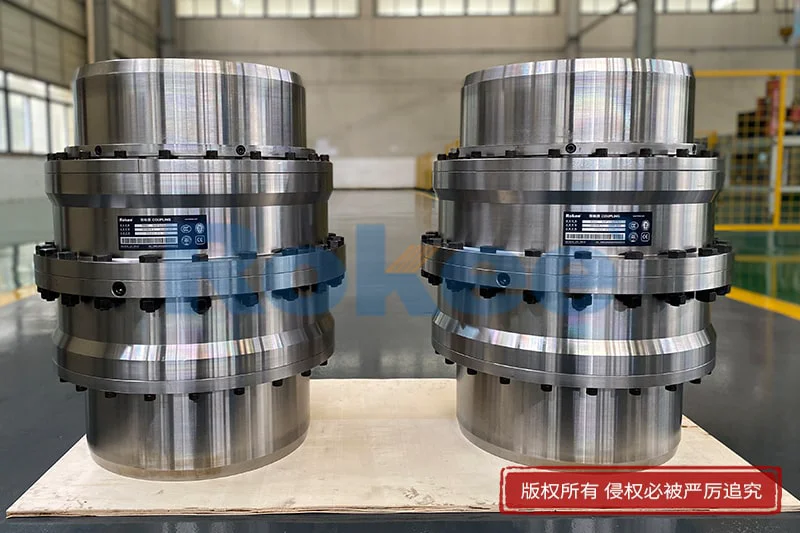
Brake Drum Couplings
Feb 25, 2026Brake drum coupling is a mechanical device that integrates transmission and braking functions. It combines the functions of coupling and brake, and plays an important role in modern mechanica… -
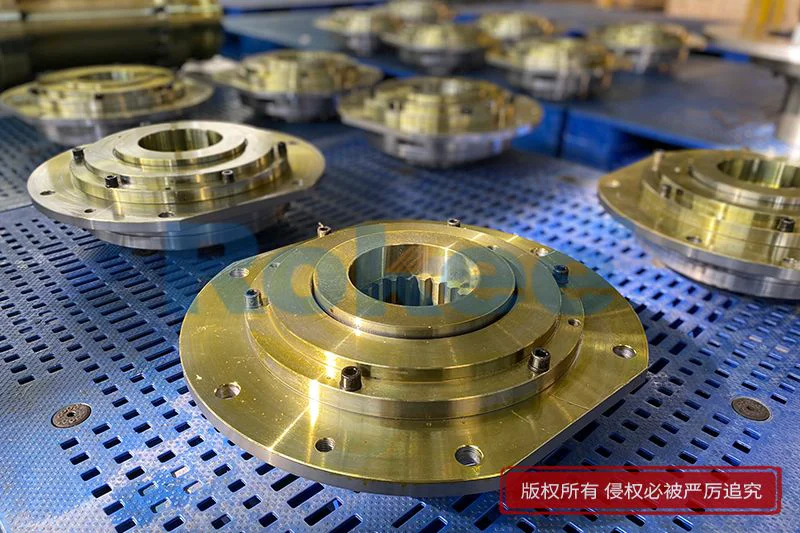
Barrel Couplings
Jan 20, 2026Barrel coupling is a mechanical transmission device specifically designed for drum type equipment, mainly used to connect the power transmission between the drive motor and the drum shaft. Th… -
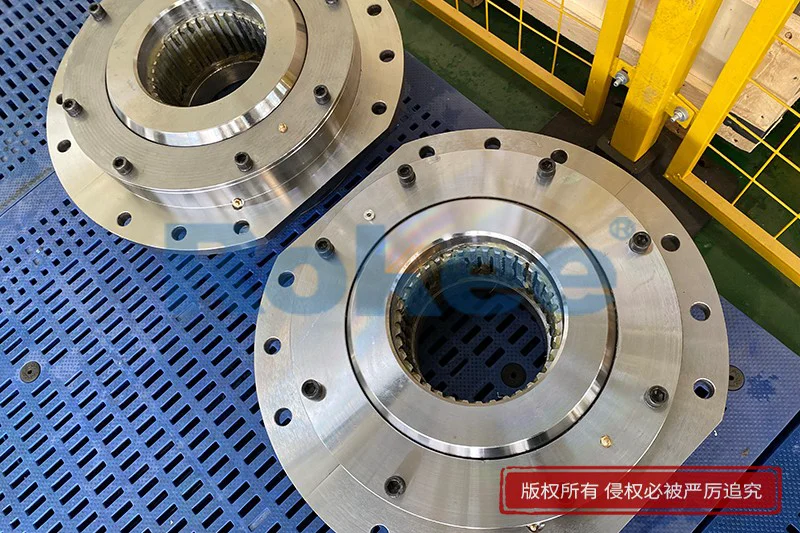
Drum Couplings
Dec 10, 2025As a special mechanical transmission device, the drum coupling plays a crucial role in modern industrial equipment. This type of coupling is designed specifically for drum type equipment, mai…