-

UL Tyre Coupling
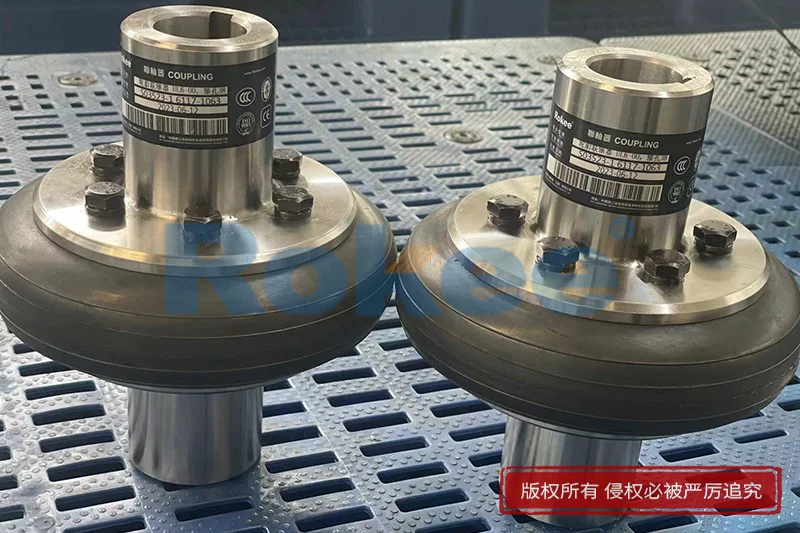
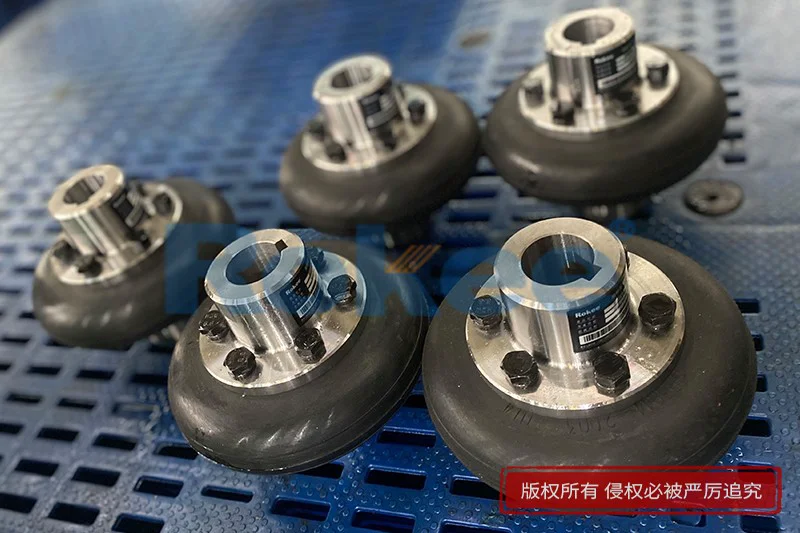
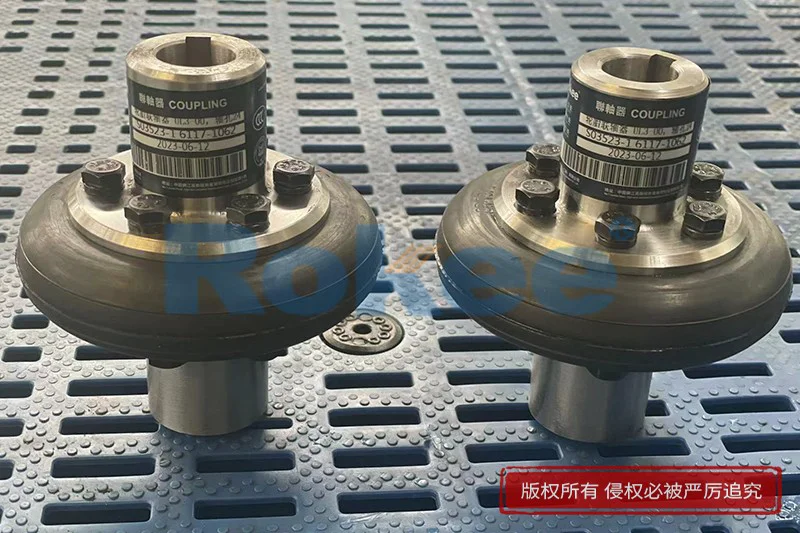
UL Tyre Coupling adopts the structure of vulcanizing and bonding the tyre body with the metal connecting plate with threaded holes, which is then directly connected to the two semi-couplings by bolts for torque transmission and other displacement compensation.View More -

LLA Tyre Coupling
The LLA Tyre Coupling uses two semi-couplings to connect both sides of the elastic tyre body through internal pressing plates and bolts, making it easy to replace the elastic tyre body.View More -

LLB Tyre Coupling
The LLB Tyre Coupling is formed by fixing two halves of the coupling and the tire body together through bolts. The shaft hole type can be Y type, J1 type, and Z1 type. It has good shock absorption and excellent inter axle offset compensation performance.View More
A tyre coupling is a highly versatile flexible mechanical coupling designed to connect two rotating shafts in industrial machinery, facilitating efficient torque transmission while compensating for various forms of shaft misalignment and dampening mechanical vibrations and shock loads. Unlike rigid couplings that offer no flexibility, tyre couplings rely on a specialized elastic tyre-shaped element as the core functional component, which sets them apart from other flexible coupling types such as gear couplings, chain couplings or diaphragm couplings. This unique design makes them indispensable in a wide range of mechanical drive systems where smooth power transfer, equipment protection and operational stability are top priorities. The fundamental structure of a standard tyre coupling is relatively straightforward yet engineered for durability, consisting of three primary components: two metallic hub flanges, a flexible elastic tyre element, and a set of fastening hardware to secure the assembly together. The metallic hub flanges are typically forged or cast from high-strength carbon steel or alloy steel, chosen for their excellent mechanical strength, wear resistance and ability to withstand repeated torsional stress without deformation. These flanges are precision machined to fit tightly onto the driving and driven shafts, with bore sizes tailored to match standard shaft diameters, and they feature evenly spaced mounting holes around their outer perimeter to accommodate the fastening bolts that hold the elastic tyre element in place. The elastic tyre element, the heart of the coupling, is manufactured from high-grade elastomeric materials, most commonly natural rubber, neoprene or synthetic rubber compounds reinforced with woven fabric or nylon cords to enhance tensile strength and load-bearing capacity. This reinforced construction prevents the tyre element from tearing or deforming excessively under heavy torque loads while retaining the necessary flexibility to absorb misalignment and shocks. The tyre element is shaped to fit snugly between the two metallic flanges, with its outer edge compressed and secured by the flanges and fastening bolts, creating a unified assembly that transfers torque through the shear and tensile forces acting on the elastic material. Unlike many other couplings that require regular lubrication to reduce friction and wear, tyre couplings are generally lubrication-free in their standard design, as the elastic tyre element operates without metal-to-metal contact between the two flanges, eliminating the need for ongoing lubrication maintenance and reducing the risk of contamination to surrounding machinery.
The performance characteristics of flexible tyre couplings are defined by their elastic properties, misalignment compensation capabilities, shock absorption capacity and torsional damping behavior, all of which make them suitable for demanding industrial operating conditions. One of the most notable performance features is their ability to accommodate multiple types of shaft misalignment simultaneously, including angular misalignment, parallel misalignment and axial misalignment, which are common in real-world machinery installations due to manufacturing tolerances, foundation settlement, thermal expansion or mechanical wear during operation. Angular misalignment occurs when the two shafts are not perfectly collinear and form a slight angle between their centerlines, while parallel misalignment refers to a lateral offset between the shaft centerlines, and axial misalignment involves a small back-and-forth movement along the shaft axis. The flexible tyre element can bend, stretch and compress to adapt to these misalignments without transmitting excessive stress to the connected shafts, bearings or gearboxes, thereby preventing premature equipment failure and extending the service life of the entire drive system. In terms of torque transmission, tyre couplings are capable of handling a wide range of torque loads, from low-power light-duty applications to heavy-duty high-torque industrial operations, with the load capacity directly related to the size, thickness and material strength of the elastic tyre element and the metallic flanges. The torsional stiffness of tyre couplings is relatively low compared to rigid or semi-flexible couplings, which means they can flex under torsional load without transferring peak shock forces to the driving or driven equipment. This low torsional stiffness, combined with the inherent damping properties of the elastomeric tyre material, allows them to effectively absorb sudden shock loads, torsional vibrations and transient torque spikes that often occur in machinery with intermittent operation, such as piston-driven equipment, conveyor systems or crushing machinery. This shock absorption capability is critical for reducing noise levels in industrial settings, minimizing wear on precision components and preventing damage to sensitive drive parts during startup, shutdown or load changes. Additionally, tyre couplings exhibit good resistance to common industrial environmental factors, including moderate temperatures, oil mist, dust and moisture, although their performance can be adjusted by selecting specific elastomer materials for extreme environments such as high-temperature or chemically exposed settings. They also offer simple and quick installation and maintenance procedures; in most cases, the elastic tyre element can be replaced without dismantling the entire coupling or moving the connected machinery, which significantly reduces downtime and maintenance costs for industrial operations.
Tire couplings are classified into several distinct types based on their structural design, assembly method, tyre element configuration and application-specific features, with each type optimized for particular operating conditions and performance requirements. The most common classification is based on the structure of the elastic tyre element and the way it is mounted to the metallic flanges, including fully enclosed tyre couplings, open-type tyre couplings, split tyre couplings and skeleton-reinforced tyre couplings. Fully enclosed tyre couplings feature a tyre element that is completely encapsulated between the two metallic flanges, with the flanges forming a protective casing around the elastic material; this design provides enhanced protection for the tyre element against external contaminants such as dust, dirt, debris and liquid splashes, making them ideal for harsh industrial environments where the coupling is exposed to harsh working conditions. The enclosed design also helps to contain the elastomer material in the event of a failure, preventing loose parts from causing further damage to nearby machinery. Open-type tyre couplings, by contrast, have a partially exposed tyre element with no full protective casing, offering greater flexibility and easier visual inspection of the tyre element for signs of wear, cracking or degradation; this type is lighter in weight and more cost-effective for clean, indoor industrial environments where environmental contamination is not a major concern. Split tyre couplings are designed with a radially split tyre element, allowing for quick installation and removal without the need to slide the coupling off the ends of the shafts, which is particularly useful in machinery layouts where shaft end access is limited or where equipment cannot be easily moved for maintenance. This split design eliminates the need to disassemble adjacent drive components, saving valuable time during routine maintenance or emergency tyre replacement. Skeleton-reinforced rubber tyre couplings feature a built-in metal or composite skeleton embedded within the elastic tyre element during the manufacturing process, which adds extra structural support and increases the torque transmission capacity and load-bearing performance of the coupling. The reinforced skeleton prevents excessive elongation of the tyre element under heavy loads, improving dimensional stability and extending the service life of the elastic component, making this type suitable for heavy-duty industrial applications with high torque demands. Another classification method is based on the torque transmission capacity and size, ranging from small light-duty tyre couplings for precision instruments and small electric motors to large heavy-duty tyre couplings for industrial pumps, compressors, rolling mills and other heavy machinery. Additionally, tyre couplings can be categorized by the type of elastomer material used for the tyre element, with standard rubber compounds for general-purpose use, heat-resistant rubber for high-temperature applications, oil-resistant rubber for environments with petroleum-based lubricants or chemicals, and low-temperature rubber for cold industrial settings. Each material variant is formulated to maintain optimal elastic properties and performance under its intended operating conditions, ensuring consistent functionality and longevity in diverse industrial scenarios.
Due to their unique combination of flexibility, shock absorption, misalignment compensation and low maintenance requirements, flexible tire couplings are widely utilized across nearly all major industrial sectors where mechanical power transmission is required, serving as a critical connecting component in countless types of machinery and drive systems. In the general manufacturing and machinery industry, they are commonly used in electric motor drives, gearboxes, conveyor belts, mixers, agitators and small to medium-sized pumps, providing a reliable connection between the motor and the driven equipment while reducing vibration and protecting against misalignment-related damage. In the water treatment and wastewater management industry, tyre couplings are installed in water pumps, sewage pumps, centrifugal blowers and aeration systems, where their ability to withstand continuous operation and dampen pump vibration ensures stable and efficient water treatment processes, even with minor shaft misalignment caused by pipeline pressure or foundation shifts. The chemical and petrochemical industry relies on tyre couplings for process pumps, compressors, agitators and reactor drives, with chemical-resistant elastomer options ensuring compatibility with harsh chemical environments and preventing contamination of process materials. In the mining and mineral processing industry, where heavy machinery operates under extreme load and vibration conditions, heavy-duty tyre couplings are used in crushing equipment, grinding mills, conveyor systems and ore handling machinery, absorbing the intense shock loads generated by intermittent material feeding and protecting the expensive drive components from premature failure. The steel and metallurgical industry employs tyre couplings in rolling mills, continuous casting machines, fans and cooling systems, where high temperatures and heavy torsional loads demand robust, heat-resistant coupling solutions that can maintain performance under harsh thermal and mechanical stress. The food and beverage industry uses food-grade or hygienic design tyre couplings in processing equipment, packaging machinery and conveyor systems, where lubrication-free operation and easy cleaning are essential to meet strict hygiene and safety standards, eliminating the risk of lubricant contamination to food products. In the agricultural machinery sector, elastic tyre couplings are fitted to tractors, harvesters, irrigation systems and grain processing equipment, providing reliable power transmission in rugged outdoor conditions and absorbing the shock loads caused by uneven terrain and variable operating loads. Marine and offshore applications also utilize specialized tyre couplings with corrosion-resistant metallic components and water-resistant elastomer materials for shipboard pumps, fans, propulsion systems and deck machinery, withstanding the corrosive saltwater environment and constant mechanical vibration typical of marine operations. Beyond these core industries, tyre couplings are also used in power generation facilities, including thermal power plants, hydroelectric plants and wind turbine systems, connecting generators to turbines and auxiliary equipment to ensure smooth power output and reduce vibration-related stress on critical power generation components. Their widespread adoption across such diverse industries is a testament to their adaptability, reliability and cost-effectiveness, as they address key mechanical challenges in power transmission while enhancing overall equipment performance and reducing long-term operational costs.
In summary, elastic tire couplings represent a highly efficient and practical solution for flexible shaft connection in industrial mechanical systems, combining a simple yet robust structural design with exceptional performance features that set them apart from other coupling types. Their core structure, centered on a high-performance elastic tyre element and durable metallic flanges, enables efficient torque transmission while accommodating multiple forms of shaft misalignment and absorbing harmful vibrations and shock loads. The diverse range of tyre coupling types, tailored to different structural needs, environmental conditions and load capacities, ensures that there is a suitable variant for nearly every industrial application, from light-duty precision machinery to heavy-duty industrial processing equipment. The absence of regular lubrication requirements, ease of maintenance and quick replacement of the elastic tyre element further enhance their practicality for continuous industrial operation, minimizing downtime and maximizing productivity. As industrial machinery continues to evolve toward higher efficiency, greater reliability and more demanding operating conditions, tyre couplings will remain a vital component in mechanical drive systems, providing consistent performance, equipment protection and operational stability across global industrial sectors. Their enduring popularity stems from their ability to balance performance, durability and cost-effectiveness, making them an essential choice for engineers and maintenance professionals seeking reliable flexible coupling solutions for a vast array of mechanical power transmission applications.
-
Tyre Couplings
Feb 27, 2026Tyre coupling is a high-performance coupling with elastic elements, named after its main structure resembling a tire. Since its emergence in the mid-20th century, this type of coupling has be… -
Tire Couplings
Jan 20, 2026Tire coupling is an elastic coupling that uses tire shaped elastic elements made of rubber or polyurethane to achieve shaft to shaft connection. It occupies an important position in the indus… -
Tyre Type Couplings
Dec 24, 2025In the realm of mechanical power transmission, couplings serve as indispensable components that connect two shafts to transmit torque while accommodating various misalignments and absorbing s… -
Pump Tyre Couplings
Dec 24, 2025In the domain of industrial power transmission, especially in pump systems, the selection of appropriate coupling components directly affects operational efficiency, equipment lifespan, and o… -
Tire Shaft Couplings
Dec 24, 2025In the field of mechanical power transmission, the demand for couplings that can balance torque transmission efficiency with vibration damping and misalignment compensation has driven the dev… -
Rubber Tyre Couplings
Dec 24, 2025In the realm of mechanical transmission systems, coupling devices serve as critical components that connect two rotating shafts, enabling the transfer of torque while accommodating various fo… -
Rubber Tire Couplings
Dec 23, 2025In the complex landscape of mechanical power transmission, couplings serve as the critical interface between rotating shafts, enabling torque transfer while addressing the inherent challenges… -
Flexible Tyre Couplings
Dec 23, 2025In the dynamic field of mechanical power transmission, couplings are indispensable components that facilitate the connection between rotating shafts, ensuring efficient torque transfer while …