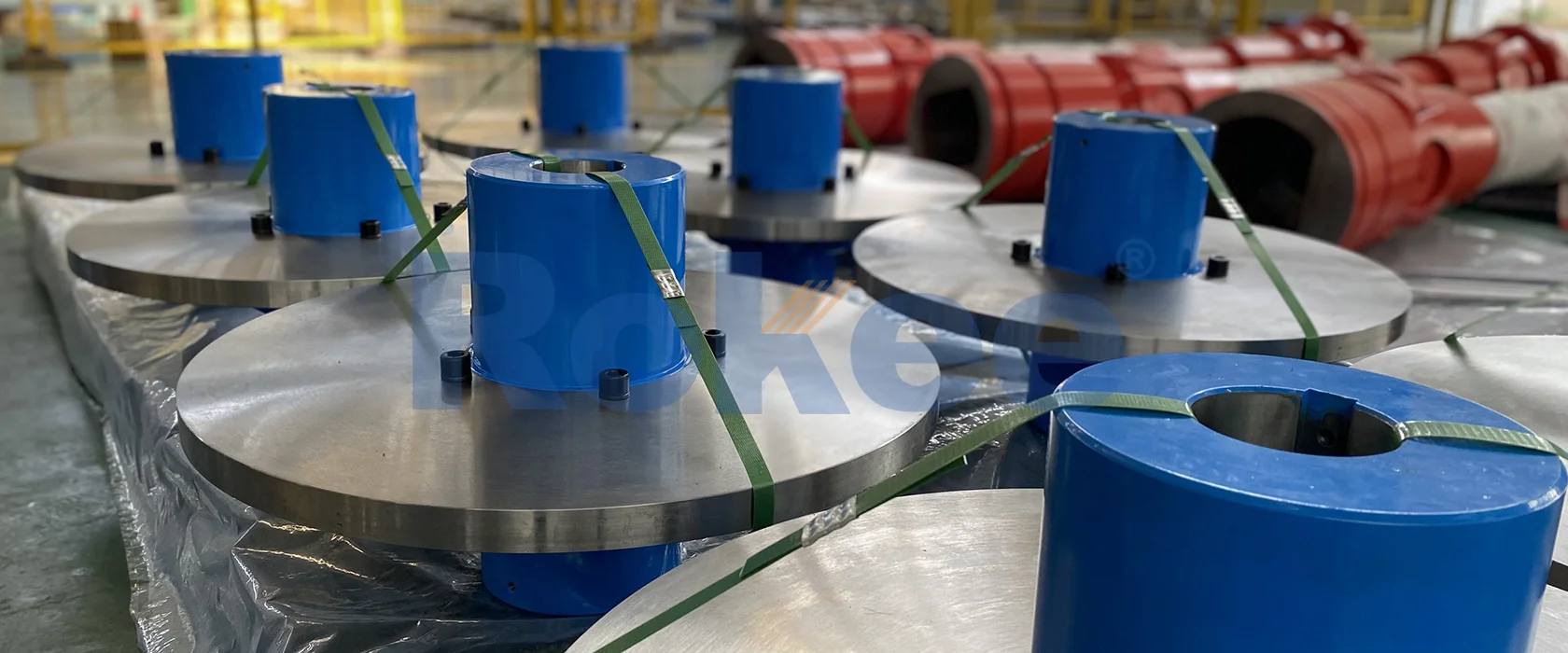
Rokee is a well-known high-quality supplier of Plum Blossom Couplings and technical services in China, customize plum blossom couplings according to user drawings, alternatively, if the user provides plum blossom couplings parameters, we can select the model and design drawings for you, support wholesale and export.


In the intricate landscape of mechanical power transmission, couplings serve as essential intermediaries that connect rotating shafts, facilitating the seamless transfer of torque while addressing common challenges such as shaft misalignment, vibration, and shock loads. Among the diverse array of coupling solutions, the plum blossom coupling (also known as the jaw coupling with a plum blossom-shaped elastic element) has earned widespread recognition for its unique combination of simplicity, reliability, and cost-effectiveness. Distinguished by its core component—an elastic plum blossom-shaped insert that fits between two metal hubs—this coupling type balances efficient torque transmission with effective vibration damping and misalignment compensation. This article provides a comprehensive exploration of plum blossom couplings, delving into their structural composition, operational mechanisms, material characteristics, key applications across industries, installation and maintenance protocols, technological advancements, and inherent limitations, aiming to deliver a holistic understanding of this vital mechanical component.
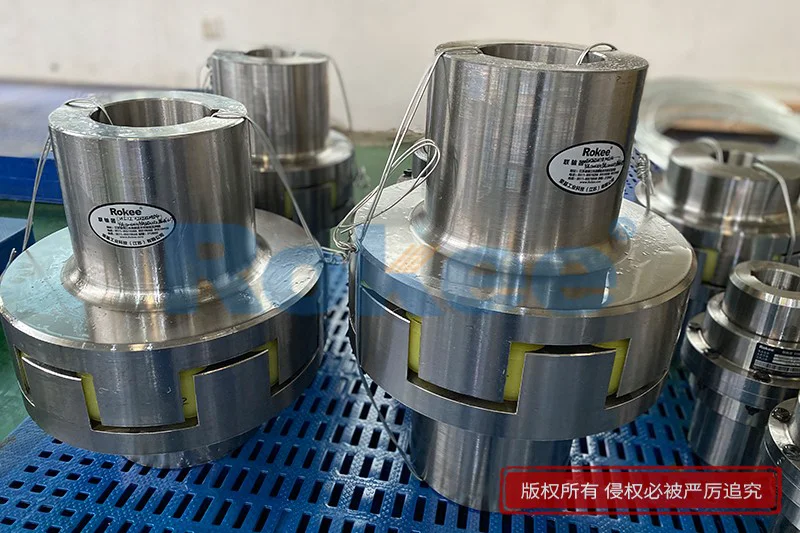
The fundamental functionality of a plum blossom coupling is anchored in its streamlined structural design, which comprises three primary components: two identical metal hubs (or flanges) with evenly distributed radial jaws, and a central elastic insert shaped like a plum blossom (hence the name). The metal hubs are typically machined with 3 to 8 jaws, depending on the torque requirements of the application, and the plum blossom insert features corresponding notches that precisely interlock with the jaws of both hubs. This interlocking design ensures a positive drive, eliminating the risk of slip between components and enabling accurate torque transfer. When the driving shaft rotates, torque is transmitted from the driving hub to the plum blossom insert through the jaw-insert interface. The elastic insert deforms elastically to accommodate minor axial, radial, and angular misalignments between the driving and driven shafts, then transfers the rotational force to the driven hub, thereby driving the driven shaft. A key advantage of this elastic deformation is its reversibility—after the load is removed, the insert returns to its original shape, ensuring consistent performance over prolonged cycles of operation.
A defining feature of plum blossom couplings is the synergy between the rigid metal hubs and the flexible elastic insert. Unlike rigid couplings that offer no misalignment compensation and can transmit excessive vibration to connected machinery, or fully elastic couplings that may sacrifice torque capacity for flexibility, plum blossom couplings leverage the high strength of metal hubs for torque bearing and the elasticity of the insert for vibration absorption and misalignment accommodation. This unique combination yields several core performance benefits: high torque transmission efficiency (typically exceeding 97%), moderate misalignment tolerance, effective vibration damping, low noise operation, and simple assembly and disassembly. Additionally, the plum blossom-shaped insert acts as a buffer, absorbing shock loads generated during startup, shutdown, or sudden load changes, thereby protecting the connected shafts, bearings, and other transmission components from premature wear or damage.
The structural design of plum blossom couplings can be further categorized based on the type of hub connection and the configuration of the plum blossom insert. Hub designs are primarily divided into solid hubs and split hubs. Solid hubs are one-piece structures that offer high rigidity and torque capacity, making them suitable for high-torque applications. However, their installation requires removing the connected shafts, which can increase downtime during maintenance. Split hubs, by contrast, feature a two-piece construction secured by bolts, allowing for on-site installation and removal without disassembling the shafts—a significant advantage in applications where equipment disassembly is time-consuming or impractical. The plum blossom insert, meanwhile, can be designed with different configurations, such as full-flower (solid center) or hollow-flower (central bore) designs. Full-flower inserts offer higher torque capacity and rigidity, while hollow-flower inserts are lighter, provide better heat dissipation, and are more suitable for high-speed applications. Some inserts also feature reinforced edges or thickened petals to enhance wear resistance and extend service life.
Material selection is a critical determinant of the performance, durability, and application range of plum blossom couplings. The metal hubs, which bear the primary torque load, are commonly manufactured from high-strength materials such as carbon steel, alloy steel, stainless steel, or aluminum alloy. Carbon steel is the most widely used material for hubs due to its excellent strength-to-cost ratio, making it suitable for most industrial applications with moderate torque requirements. Alloy steel, reinforced with elements such as chromium, nickel, or molybdenum, offers superior tensile strength and fatigue resistance, making it ideal for high-torque, heavy-duty applications such as industrial gearboxes or construction machinery. Stainless steel hubs are preferred in corrosive environments—such as marine, chemical processing, or food industry applications—due to their exceptional corrosion resistance and ease of cleaning. Aluminum alloy hubs, though less strong than steel, are lightweight and offer good thermal conductivity, making them suitable for low-torque, high-speed applications such as electric motors, small pumps, or precision machinery.
The plum blossom insert, as the core flexible and vibration-damping element, is typically fabricated from polymer materials that combine elasticity, wear resistance, and resistance to environmental factors. The most commonly used materials for inserts include nitrile rubber (NBR), ethylene propylene diene monomer (EPDM), polyurethane (PU), and silicone rubber. Nitrile rubber is a popular choice for industrial applications due to its excellent oil and fuel resistance, making it suitable for use in automotive transmission systems, hydraulic pumps, or other equipment exposed to petroleum-based fluids. EPDM rubber offers superior resistance to weathering, ozone, and high temperatures (up to 150°C), making it ideal for outdoor applications such as agricultural machinery or outdoor power generation equipment. Polyurethane inserts provide higher hardness, wear resistance, and load-bearing capacity than rubber, offering longer service life in high-torque or high-frequency shock load applications such as conveyors or crushers. Silicone rubber, meanwhile, boasts the widest temperature range (-60°C to 250°C) and excellent resistance to extreme environments, making it suitable for specialized applications such as aerospace equipment or high-temperature industrial furnaces. To enhance performance, additives such as antioxidants, plasticizers, and reinforcing fibers are often incorporated into the insert materials to improve fatigue resistance, extend service life, and enhance environmental adaptability.
The versatility of plum blossom couplings, stemming from their balanced performance, simple design, and cost-effectiveness, makes them suitable for a wide range of applications across diverse industries. One of the primary application areas is industrial machinery, where they are extensively used to connect motors, pumps, compressors, fans, conveyors, mixers, and gearboxes. In pump systems, for example, plum blossom couplings accommodate the minor misalignments between the motor and pump shafts caused by thermal expansion, installation tolerances, or foundation settlement, reducing wear on the pump’s bearings and seals and extending the pump’s service life. In conveyor systems, their vibration damping capabilities absorb the shock loads generated during material transfer and startup, ensuring smooth operation and preventing damage to the conveyor’s drive system. Compressors, particularly those used in refrigeration and air conditioning systems, benefit from the oil resistance of nitrile rubber inserts, which prevent insert degradation from lubricants used in the compressor.
The automotive and transportation industry is another major user of plum blossom couplings. They are employed in the transmission systems of light commercial vehicles, agricultural machinery (such as tractors, harvesters, and irrigation pumps), and construction equipment (such as excavators, loaders, and concrete mixers). In these applications, the coupling’s ability to absorb shock loads and accommodate misalignments is critical, as the machinery operates in harsh conditions with uneven terrain, frequent start-stop cycles, and variable loads. Plum blossom couplings are also increasingly used in electric vehicles (EVs) and hybrid vehicles, where their lightweight design (when paired with aluminum hubs) and high efficiency contribute to improving the vehicle’s energy efficiency and range. Additionally, they are used in small engine-driven equipment such as generators, lawnmowers, and small agricultural tools, where their simplicity and reliability are highly valued.
The food and beverage industry and pharmaceutical industry also rely on plum blossom couplings, particularly those with stainless steel hubs and food-grade elastic inserts. The stainless steel construction ensures resistance to corrosion from harsh cleaning chemicals (such as sodium hypochlorite or peracetic acid) used in hygiene-critical environments, while food-grade inserts (made from materials such as FDA-approved polyurethane or EPDM) prevent product contamination. These couplings are used in processing equipment such as mixers, blenders, filling machines, and conveyors, where hygiene, reliability, and low noise operation are paramount. Furthermore, plum blossom couplings find applications in the renewable energy sector, such as connecting small wind turbines or hydroelectric generators to their drive systems, where their vibration damping capabilities help protect sensitive electrical components from mechanical stress.
Proper installation is essential to ensuring the optimal performance and longevity of plum blossom couplings. The first and most critical step is the accurate alignment of the driving and driven shafts. While plum blossom couplings can accommodate moderate misalignments (typically up to 1.5 degrees angular misalignment, 0.5 mm radial misalignment, and 2 mm axial misalignment, depending on the design), excessive misalignment will cause uneven stress on the plum blossom insert, leading to premature wear, cracking, or failure. To achieve precise alignment, maintenance personnel should use precision tools such as laser alignment systems or dial indicators, and ensure that the shafts are aligned within the manufacturer’s recommended tolerances. It is also important to check both static alignment (when the machinery is stationary) and dynamic alignment (when the machinery is operating at full speed), as thermal expansion during operation can alter the alignment of the shafts.
The next step in installation is the mounting of the hubs onto the shafts. For solid hubs, this typically involves sliding the hub onto the shaft and securing it with a key and set screws, or using an interference fit (press fit) for higher torque applications. For split hubs, the two halves of the hub are clamped around the shaft and fastened with bolts, ensuring that the clamping force is evenly distributed to avoid damaging the shaft. Once the hubs are installed, the plum blossom insert is placed between the jaws of the two hubs, ensuring that it fits snugly without excessive compression. Excessive compression of the insert can lead to increased friction, heat generation, and reduced flexibility, which can accelerate insert degradation. Finally, a comprehensive inspection should be performed to ensure that there is no interference between the coupling components and other parts of the machinery, and that the shafts rotate freely without binding or excessive vibration.
Regular maintenance is crucial to preventing unexpected failures and extending the service life of plum blossom couplings. The primary maintenance task is the periodic inspection of the plum blossom insert, as it is the coupling’s primary wear component. Inspections should focus on signs of wear or degradation, such as cracking, tearing, hardening, softening, deformation, or excessive wear on the insert’s notches. If any of these signs are detected, the insert should be replaced immediately to avoid damage to the hubs, shafts, or other connected components. The metal hubs and their fasteners (bolts, set screws) should also be inspected regularly to ensure that they are tight and free from damage. Loose fasteners can cause excessive vibration, misalignment, and premature wear of the insert, while damaged hubs (such as bent or worn jaws) can compromise the coupling’s torque transmission capacity.
In corrosive environments, additional maintenance steps are necessary, including regular cleaning of the coupling components to remove salt, dust, or chemical residues, and inspection for signs of corrosion on the hubs. If corrosion is detected, the affected components should be cleaned, treated with anti-corrosion coatings, or replaced as needed. Most plum blossom couplings are designed to be maintenance-free due to the self-lubricating properties of the elastic insert, so lubrication is generally not required. However, in applications where the coupling is exposed to excessive dust, dirt, or moisture, periodic cleaning of the insert and hubs is recommended to prevent the accumulation of contaminants that can accelerate wear. Additionally, monitoring the operating temperature of the coupling can help detect potential issues—excessive heat may indicate misalignment, overloading, or insert degradation, and should be addressed promptly to minimize downtime and repair costs.
Technological advancements in recent years have led to significant improvements in the design and performance of plum blossom couplings. One of the key areas of innovation is the development of advanced materials for the plum blossom insert. For example, the use of thermoplastic elastomers (TPEs) and composite materials (such as fiber-reinforced polyurethane) has resulted in inserts with higher wear resistance, better temperature stability, and longer service life than traditional rubber or polyurethane inserts. These advanced materials also offer improved resistance to chemicals, UV radiation, and aging, expanding the application range of plum blossom couplings to more harsh and demanding environments. Additionally, the development of flame-retardant and static-conductive inserts has made plum blossom couplings suitable for use in explosive or hazardous environments, such as oil refineries or coal mines.
Another area of advancement is the optimization of hub design through computer-aided design (CAD) and finite element analysis (FEA). These tools allow engineers to design hubs with more efficient geometries, reducing weight while maintaining or increasing torque capacity. For example, hollow hubs with optimized rib structures offer a higher strength-to-weight ratio than solid hubs, making them ideal for lightweight applications such as electric vehicles and precision machinery. Advancements in manufacturing processes, such as precision CNC machining and 3D printing, have also enabled the production of complex jaw geometries that improve the interface between the hub and the insert, reducing stress concentrations and enhancing torque transmission efficiency. Additionally, the use of surface treatments such as galvanizing, chrome plating, or powder coating on the hubs has improved their corrosion resistance and aesthetic appearance.
The integration of smart monitoring technologies is another growing trend in plum blossom couplings. Modern couplings can be equipped with embedded sensors that measure parameters such as vibration, temperature, and torque in real time. This data is transmitted to a central monitoring system, allowing maintenance personnel to detect early signs of insert wear, misalignment, or overloading. Predictive maintenance based on this data enables proactive scheduling of maintenance activities, reducing unplanned downtime and improving the overall reliability of the machinery. Furthermore, the development of modular coupling systems has simplified component replacement—many modern plum blossom couplings allow for quick replacement of the insert without removing the hubs from the shafts, further reducing maintenance time and costs.
Despite their numerous advantages, plum blossom couplings also have certain limitations that must be considered when selecting a coupling for a specific application. One of the main limitations is their limited misalignment tolerance compared to more flexible coupling types, such as rubber tyre couplings or universal joints. This makes them unsuitable for applications with significant shaft misalignments, such as machinery with flexible foundations or large thermal expansion differences. Another limitation is the temperature range of the elastic insert—most standard inserts can only withstand temperatures between -20°C and 120°C, making them unsuitable for extreme high-temperature or low-temperature applications unless specialized materials (such as silicone rubber) are used. Additionally, the plum blossom insert is susceptible to degradation from exposure to strong acids, bases, or organic solvents, which can limit their use in chemical processing applications without proper material selection.
In conclusion, plum blossom couplings are a reliable, versatile, and cost-effective solution for mechanical power transmission, offering a balanced combination of efficient torque transmission, vibration damping, misalignment compensation, and ease of maintenance. Their streamlined design—combining metal hubs with a plum blossom-shaped elastic insert—makes them suitable for a wide range of applications across industries such as industrial machinery, automotive, food processing, and renewable energy. Material selection plays a pivotal role in their performance, with the choice of hub material (steel, stainless steel, aluminum) and insert material (rubber, polyurethane, silicone) tailored to the specific environmental and operational requirements of the application.
Proper installation and regular maintenance—particularly focusing on shaft alignment and the inspection of the plum blossom insert—are essential to ensuring optimal performance and longevity. Recent technological advancements in materials, design, and monitoring systems have further enhanced the capabilities of plum blossom couplings, expanding their application range and improving their reliability. Despite their limitations, plum blossom couplings remain a preferred choice for many critical applications due to their robust performance, simplicity, and cost-effectiveness. As industries continue to evolve and demand more efficient, reliable, and lightweight power transmission systems, plum blossom couplings are likely to undergo further innovations, solidifying their position as a key component in modern mechanical systems. Whether in a small industrial pump, a heavy-duty tractor, or a precision food processing machine, plum blossom couplings play an indispensable role in ensuring the smooth and efficient transfer of power, contributing to the overall productivity and reliability of industrial operations.
« Plum Blossom Couplings » Post Date: 2024/4/25 , https://www.rokeecoupling.net/tags/plum-blossom-couplings.html